Business hours
Monday to Friday (8.30AM - 5PM)
Weekend (Closed)


A client in Perth can have a strong salary, a manageable mortgage and a carefully planned investment strategy, yet still be financially exposed if illness or injury stops work. The first missed pay cycle can force difficult choices between mortgage repayments, childcare, groceries, school costs and savings contributions. Sick leave and cash reserves may help for a while, but they aren't a long-term plan for a household that depends on earned income.
Income protection insurance in Australia is designed to act as a backup paycheque when you can't work because of illness or injury. The product has changed substantially since 2020, and modern policies are more tightly structured than the generous legacy contracts many professionals remember. This guide explains what those changes mean, how to set waiting and benefit periods, how payouts are assessed, and where tax and policy ownership fit into the decision.
Your Financial Safety Net in 2026
A dual-income household in Western Australia can have a professional salary, a small business, a mortgage, childcare costs and regular investments, yet still face pressure when one income stops. Permanent disability is not required. A period away from work can disrupt cash flow quickly, especially when business drawings or commissions vary.
Income protection is designed for that interruption. It does not insure a particular job or promise to replace the full salary. Instead, after the chosen waiting period, it may pay a monthly benefit, subject to the policy wording and the insurer's claim assessment.
The product now demands closer review than older policies did. APRA found that Australia's income protection sector had been losing around $3.4 billion over the five years to December 2019. This prompted major policy changes, including the removal of agreed value income protection for new applicants from 1 April 2020. Remaining legacy products closed to new business by 1 October 2021.
Practical rule: Do not compare a pre-2020 policy with a modern policy by premium alone. The definitions, income assessment and benefit limits can be completely different.
The history of the Australian income protection changes matters when reviewing older cover, replacing a policy or checking whether existing protection still suits your circumstances. A policy purchased years ago may operate under terms that are no longer available to new applicants.
Review the cover against your actual financial plan. Identify which commitments must continue, how much monthly income the household needs, and how long assets or savings could carry the gap. The right policy is the one structured around those priorities, rather than the lowest initial premium.
What Income Protection Really Guards
Think of income protection as a backup paycheque, not a general insurance payout. If an insured illness or injury prevents you from working, the policy may replace part of your pre-disability income so your household can continue meeting its commitments.
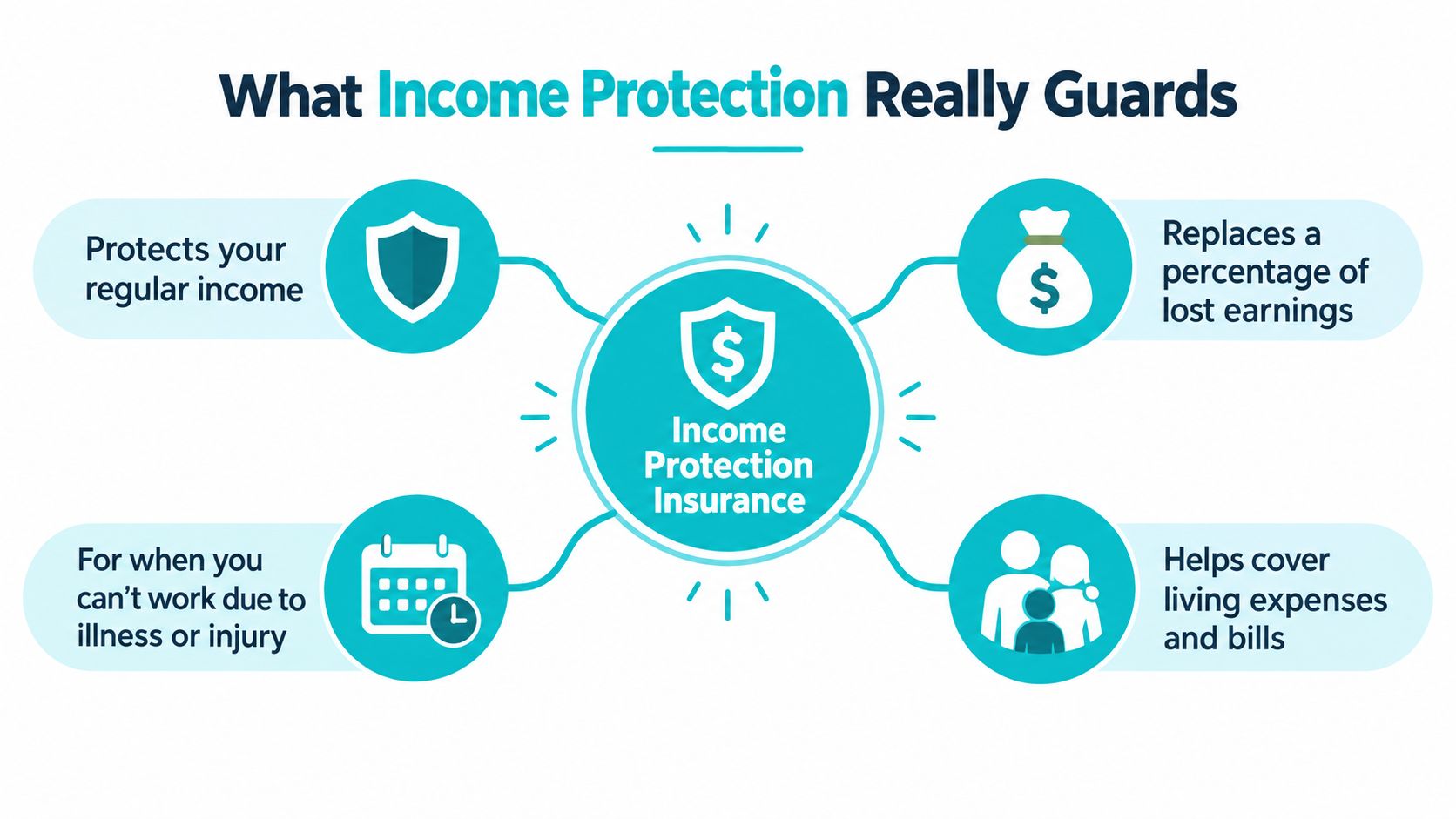
The money isn't usually allocated to one specific bill. You can generally use an approved benefit to support the expenses your income normally covers, including:
- Mortgage or rent: Keeping housing repayments current protects your family from a forced sale or an urgent refinancing decision.
- Childcare and education: These costs often continue even when a parent can't work.
- Everyday living: Groceries, utilities, transport and medical expenses still need to be paid.
- Debt reduction: A benefit can help prevent credit cards, personal loans or business obligations from accumulating.
- Long-term goals: Maintaining superannuation contributions or investment plans may be possible, depending on the benefit and household budget.
Income protection isn't the same as total and permanent disability insurance, which generally addresses a lasting inability to work or perform certain activities under its policy definition. It also differs from trauma insurance, which pays a lump sum if you meet the definition of a specified medical condition. Income protection focuses on replacing a portion of earnings over an approved period.
The distinction matters because each type of cover solves a different cash-flow problem. Trauma cover can provide immediate capital for treatment, rehabilitation or debt reduction. TPD cover can support a permanent change in work capacity. Income protection is designed for the period when you can't earn your normal income but the eventual return to work remains possible.
Across the Australian market for the year to 30 June 2025, the average claims acceptance rate for advised income protection insurance was 94.4%, according to Australian income protection data published by the ATO. That doesn't mean every claim is accepted, or that every accepted claim pays the maximum benefit. It does show that advised income protection is a genuine claims-paying product, not merely a tax or superannuation arrangement.
Choosing Your Waiting and Benefit Periods
Waiting and benefit periods determine how much financial risk stays with you and how much transfers to the insurer. They should be selected around your cash reserves, sick leave, household commitments and the likely duration of a serious interruption to work.
The waiting period is your first line of self-funding
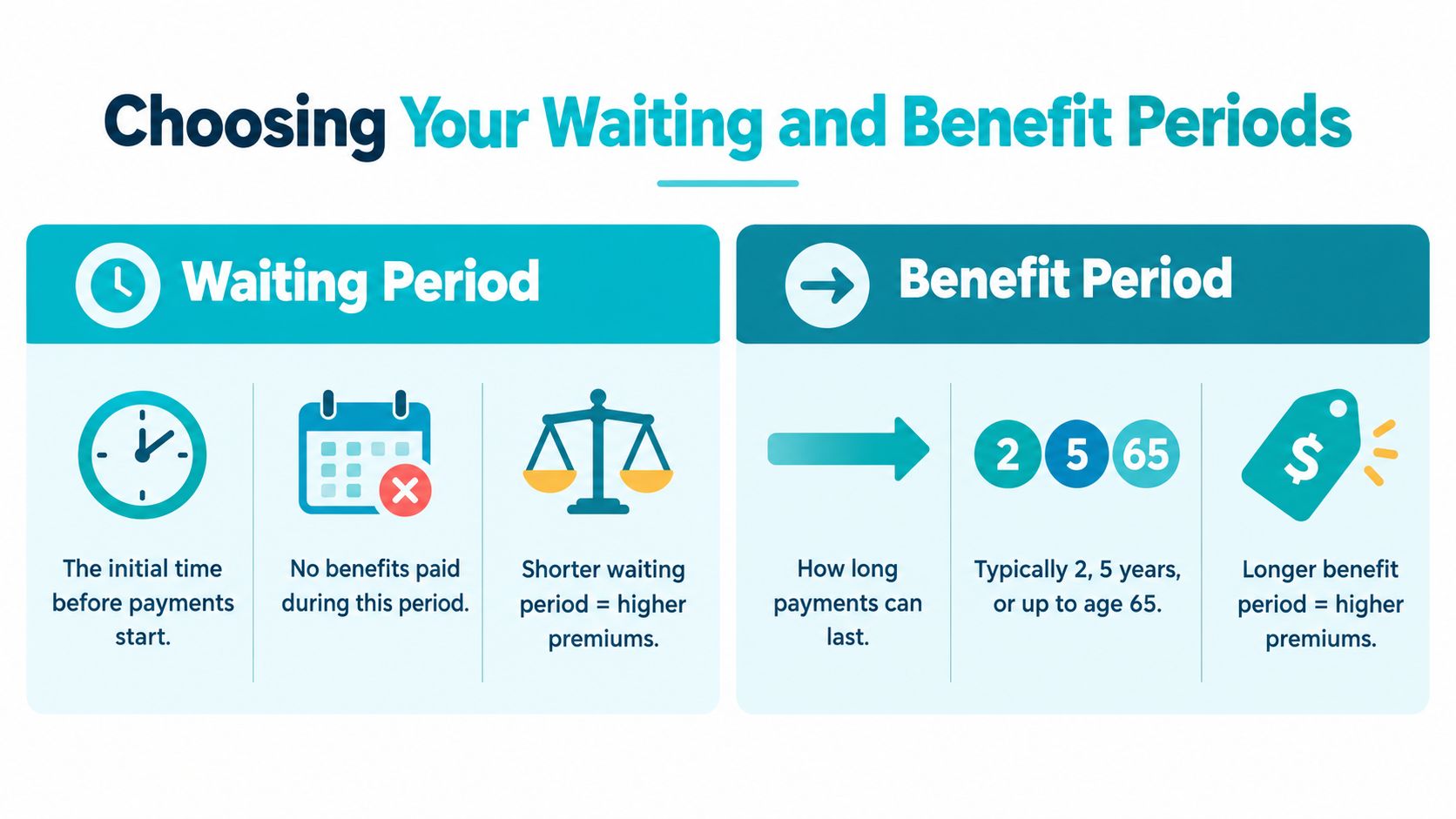
The waiting period is the time between becoming unable to work and the start of eligible payments. During that period, you may rely on sick leave, savings, annual leave, partner income or business reserves.
A shorter waiting period can suit someone with limited savings or a household that relies heavily on one income. It generally costs more because the insurer starts paying sooner. A longer waiting period can reduce the premium, but only if you can comfortably fund the gap without selling investments or taking on expensive debt.
Use a simple cash-flow test:
- Add the household expenses that can't be paused.
- Deduct reliable income from your partner, leave entitlements and accessible reserves.
- Ask whether the remaining cash can cover the selected waiting period.
- Stress-test the result against reduced business revenue, medical costs and emergency repairs.
For Western Australian professionals and dual-income families, the central issue isn't merely replacing income. The cover must be sufficient to fund major commitments such as a mortgage and childcare once the waiting period ends, a point also highlighted by MoneySmart's income protection guidance.
The benefit period controls the depth of protection
The benefit period is the maximum time the policy can pay an eligible claim. A shorter period may be adequate for someone with substantial assets, low debt and a realistic return-to-work pathway. A longer period is more appropriate when the household needs protection against an extended absence, especially where income supports dependants or a business.
Don't choose a long benefit period automatically. The cost must fit the plan, and the definition of disability, rehabilitation provisions and return-to-work rules matter as much as the headline duration.
| Household position | Sensible decision focus |
|---|---|
| Strong reserves and low fixed costs | Consider whether a longer waiting period is affordable and whether a shorter benefit period still meets the core risk. |
| High mortgage and childcare commitments | Prioritise a benefit that can sustain essential expenses after the waiting period. |
| Business owner with uneven drawings | Check how the insurer assesses income and whether the waiting period matches the business cash reserve. |
| Pre-retiree with significant assets | Coordinate cover with superannuation, investments, debt and the planned retirement date. |
The cheapest configuration isn't automatically efficient. A low premium can mean you've retained more risk through a longer waiting period, a smaller monthly benefit or a shorter benefit period.
How Your Income Protection Payout Is Calculated
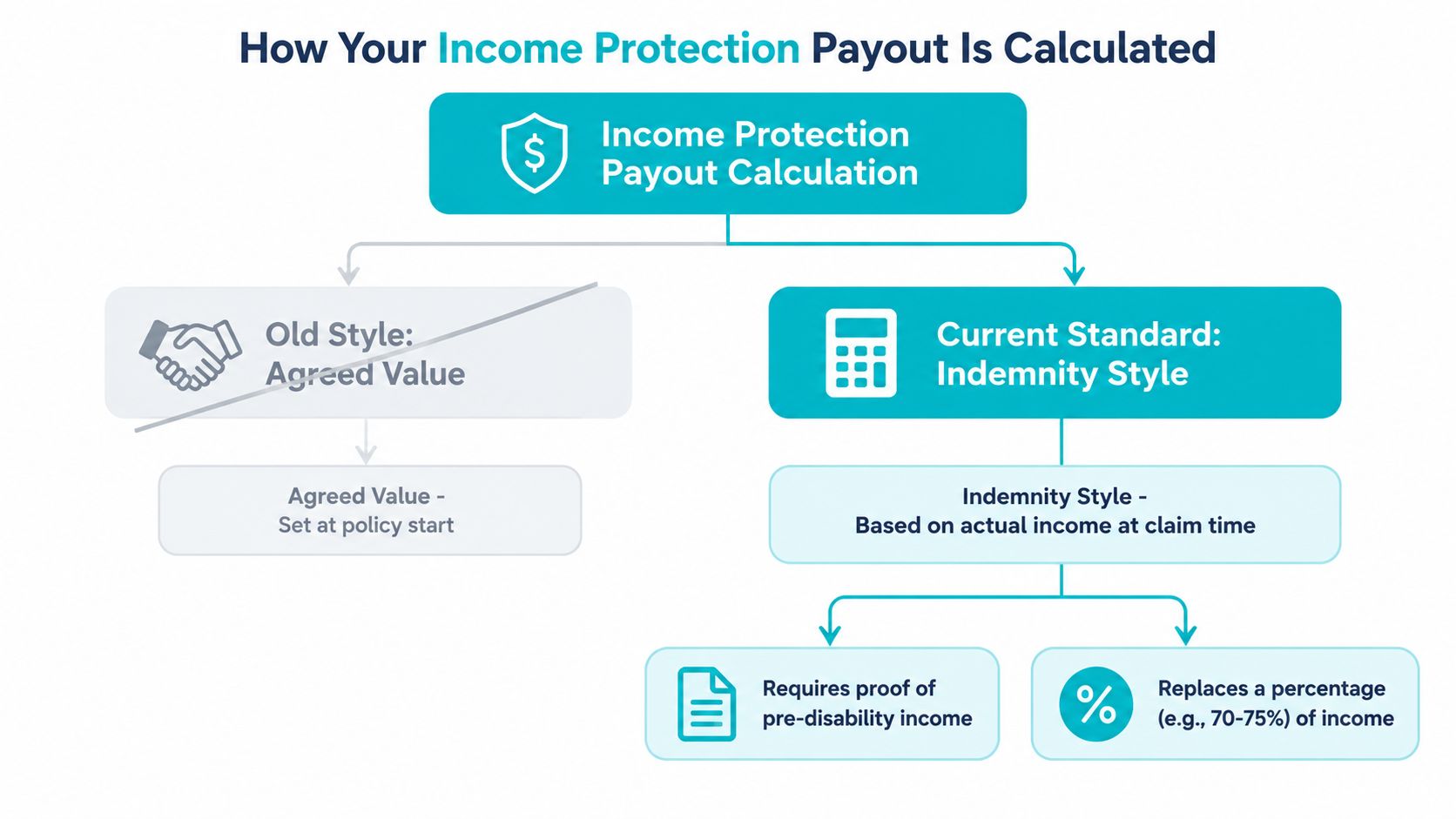
A policy schedule can show a monthly benefit that is higher than the amount ultimately paid. Modern income protection is generally indemnity-style cover, so the insurer verifies your income near the claim date and applies the policy formula, limits and evidence requirements. Treat the scheduled amount as a planning ceiling, not a guaranteed payment.
Why agreed value disappeared
Older agreed value policies could establish the insured benefit when the application was accepted, subject to the contract. That structure provided more certainty if income later declined, but it also contributed to products APRA considered financially unsustainable. New applicants cannot obtain that legacy arrangement.
Following APRA's intervention, new income protection policies issued after 1 October 2021 adopted tighter income-replacement caps and stronger return-to-work features. The documented changes to income protection policy design explain why an older agreed value policy should not be compared directly with a current indemnity policy.
Under APRA's post-2021 framework, new disability income insurance issued by life companies is expected to replace no more than 90% of earnings for the first six months of a claim and no more than 70% thereafter. Separate rehabilitation or retraining support payments may be available where legislation permits. Your benefit therefore needs to fit the household budget without assuming it will replace every dollar of salary.
What counts as income
For a PAYG employee, the insurer may review salary records, payslips, tax documents and employer information. Bonuses, commissions and other variable remuneration can receive different treatment, depending on the wording and supporting evidence.
Business owners need a more detailed assessment. Drawings do not automatically equal personal income. The insurer may examine financial statements, ownership arrangements, your role in producing revenue and the financial effect of your absence. If personal exertion drives business income, assess the policy alongside business continuity arrangements.
Prepare the evidence before a claim. Keep tax returns, financial statements, payslips, employment records and policy documents organised. Ask the insurer how it defines pre-disability income and which earnings periods it will examine.
The most important number in a modern policy is not the maximum benefit printed on the schedule. It is the benefit the insurer can support after verifying your actual income at claim time.
A professional review should test likely changes to your working life. Parental leave, reduced hours, a move into private practice, business growth or a planned transition to retirement can change the income an indemnity policy recognises. Set the benefit around the financial goals the cover must protect, then review it when your income structure changes.
Understanding Common Policy Exclusions
Income protection isn't unlimited income replacement. The insurer pays only when the claim meets the policy's definition of disability, waiting requirements and other contractual conditions.
Common limitations can include:
- Self-harm provisions: Policies may restrict claims connected with self-harm, particularly during an initial period or where specific wording applies.
- Elective treatment: A voluntary procedure may not create an eligible claim in the same way as an unexpected illness or injury.
- Normal pregnancy: Ordinary pregnancy and childbirth aren't automatically treated as an insured sickness. Complications may be considered differently under the policy.
- Pre-existing conditions: An insurer may exclude a condition, apply a loading or decline an application after underwriting.
- Non-disclosure: Omitting relevant medical, occupational or financial information can create serious problems at claim time.
These rules vary between insurers and policy versions. Don't rely on a generic summary when a specific exclusion could affect your occupation or medical history. Read the product disclosure statement, ask for exclusions and special conditions in writing, and understand whether a future claim would be assessed under an own occupation, duties-based or broader definition.
The application stage is where many avoidable problems begin. Give complete answers about medical treatment, symptoms, medication, hazardous activities, smoking and work duties. A difficult underwriting conversation is preferable to discovering years later that an important condition wasn't properly disclosed.
For a plain-English discussion of limitations, review what income protection does not cover. The aim isn't to make the policy sound unattractive. It's to ensure the cover you buy matches the risk you believe you're transferring.
The Cost of Cover and Your Tax Deductions
Premiums reflect the risk the insurer is accepting and the level of protection you're selecting. Age, occupation, health, smoking status, the waiting period, the benefit period and the monthly benefit can all affect the price. A physically hazardous occupation may be assessed differently from office-based work, while a longer benefit period can transfer more risk to the insurer.
Policy ownership also changes the tax result. The ATO's income protection deduction guidance says only premiums paid to protect salary and wages are deductible. You can't claim the deduction when the policy is held through superannuation and premiums are deducted from contributions, or when the policy pays a capital sum rather than replacing income.
A deductible premium reduces taxable income rather than producing a dollar-for-dollar refund. The following examples show the potential saving on a $1,000 deductible premium, based on the marginal tax rates set out in independent Australian tax guidance for income protection:
| Marginal tax rate | Approximate tax saving |
|---|---|
| 16% | $160 |
| 30% | $300 |
| 37% | $370 |
| 45% | $450 |
Tax treatment depends on your circumstances, and deductible premiums can have taxable consequences on the benefit. If tax hasn't been withheld, the ATO's guidance on income protection payments says payments that replace employment income must be declared as other income when the premiums were deductible.
Tax is a consideration, not the reason to buy an unsuitable policy. First make the benefit, definitions and affordability work. Then structure ownership so the tax treatment supports the broader plan.
If illness or disability creates additional daily-living pressures, financial planning may sit alongside practical support. For example, families researching getting Centrelink continence support may need to consider government assistance separately from private insurance. For specific guidance on the deduction and ownership questions, see income protection insurance tax deductions.
A Checklist for Selecting Your Policy
Start with the household, not the insurer's product brochure. A policy is useful only if its benefit, waiting period and definitions work against the financial commitments you have.
Ask these questions before applying
- What income needs replacing? Calculate the amount required for essential expenses, not just a percentage of gross salary.
- Which costs are fixed? Identify mortgage repayments, rent, childcare, school costs, debt repayments and insurance premiums that won't stop when work does.
- How long could savings last? Match the waiting period to accessible cash, sick leave and reliable partner income.
- What happens if earnings change? Test commissions, business drawings, reduced hours, parental leave and a future career transition.
- Does the occupation create specific risks? A medical professional, tradesperson, executive and business owner may face very different work-capacity assessments.
- Is an existing policy valuable? Don't cancel a legacy contract before comparing its definitions and income assessment with a new indemnity policy.
- Who should own the policy? Consider deductibility, superannuation arrangements, cash flow and the tax treatment of future payments.
- Can the household maintain the premium? A policy that becomes unaffordable during a difficult period won't provide dependable protection.
Compare policies on more than the monthly premium. The income protection policy comparison guidance should be read alongside the product disclosure statement, underwriting outcome and your broader financial plan. External reading, including World Property Investor's insurance insights, can also help illustrate why insurance comparisons need to focus on the risks covered and exclusions, rather than price alone.

Wealth Collective's Protection Plus service reviews income protection alongside life, TPD and trauma insurance, then connects those recommendations with superannuation, debt, investments and retirement objectives. That process is particularly relevant for professionals, dual-income families, business owners and pre-retirees who need their cover to support a complete financial strategy rather than operate as a standalone purchase.
Book a free, no-obligation 10-minute initial call with Wealth Collective to review your income protection needs, existing policies and household cash-flow risks. Their advisers can help you assess the right benefit structure, policy ownership and protection strategy for your circumstances in Western Australia.