Business hours
Monday to Friday (8.30AM - 5PM)
Weekend (Closed)


A family can hold life insurance and still be badly exposed. Australian data shows that 1.0 million people are underinsured for death and total and permanent disability needs, while 3.4 million are underinsured for income protection. Around 15.0 million Australians had life insurance in 2022, so the problem isn't a lack of policies. It's the gap between having cover and having enough cover when a mortgage, children and a household budget depend on two incomes. (CALI life insurance data)
For a dual-income family, insurance should protect the plan you're already working hard to build. That means testing your cover against debt, future expenses, lost earnings, serious illness and the practical delays involved in making a claim. Premium price matters, but it comes after the more important question: will this policy keep your family financially stable when one income disappears?
Why Most Australian Families Are Underinsured
96% of families lacked enough life insurance to protect their families for 10 years or more, leaving only 4% adequately insured. The same analysis placed Australia's insurance gap at $1,370 billion, alongside more than 5 million families with dependent children. (ANZ underinsurance analysis)
For a dual-income household, those figures expose the weakness in relying on a policy statement, an employer benefit or default superannuation cover. A modest lump sum might reduce part of the mortgage, yet leave no proper allowance for replacing a parent's income, paying for childcare, meeting education costs or giving the surviving partner room to reduce work.
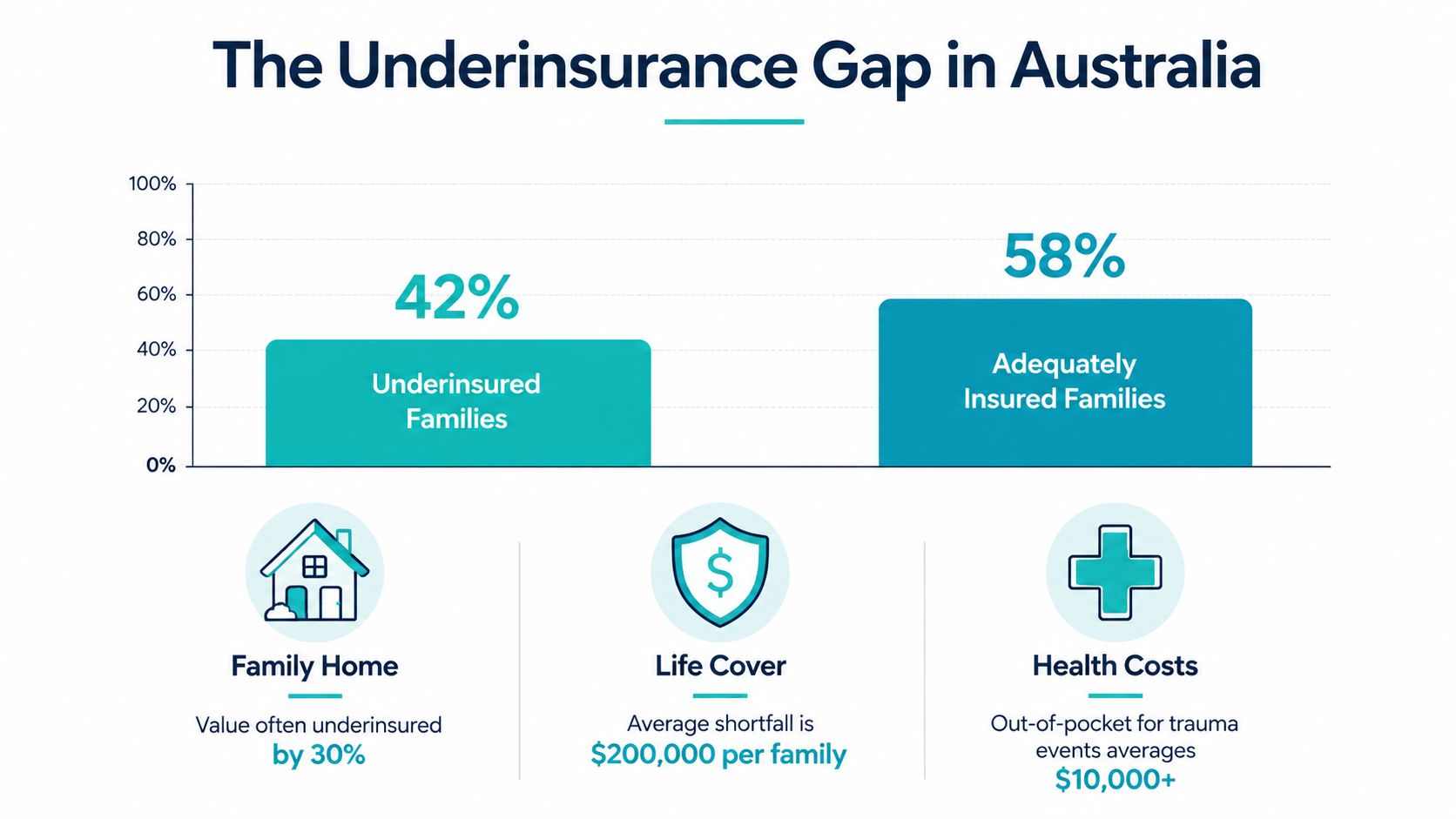
When claims come in, the size of the gap becomes clear. In 2022, 85,000 Australians or their loved ones received $11.2 billion in life-insurance claims, including $2.9 billion for death cover, $3.2 billion for TPD, $3.7 billion for income protection and $1.4 billion for other cover such as trauma cover. (CALI claims data)
Insurance pays meaningful benefits to real households, but inadequate limits, outdated beneficiaries and policies that no longer match family responsibilities can still leave a serious shortfall. The My Policy Quote family insurance guide can help compare policy features. It cannot calculate your household's actual exposure.
Use a clear wealth-protection framework: identify each risk, quantify its financial impact, check how the policy pays, then review ownership, beneficiaries, exclusions and affordability. The recommendation is not to buy every available policy. It is to build cover that protects the family's income and keeps the broader wealth plan intact.
The Four Core Policies Every Family Should Understand
Families usually need to understand four forms of personal cover. They don't all solve the same problem, and replacing one with another creates a dangerous false sense of security.
Life cover
Life insurance pays a lump sum after the insured person dies, subject to the policy terms. For a family with a mortgage and dependent children, that money may repay debt, create a capital reserve and give the surviving parent choices around work and care.
A practical example is a household where both parents earn, but one handles most school runs and domestic responsibilities. If that parent dies, the surviving partner may face lost income, additional childcare and a sudden need to restructure work. The policy needs to reflect those costs, not just the outstanding mortgage.
Life cover is generally about the financial consequences of death. It shouldn't be treated as a substitute for income protection or trauma cover while both parents are alive.
Total and permanent disability cover
TPD pays a lump sum when an illness or injury meets the policy's definition of total and permanent disability. Definitions vary, and the occupation category, waiting requirements and evidence demanded can materially affect a claim.
Suppose a parent suffers a serious injury and can't return to their occupation or another suitable form of work. A TPD benefit may help reduce the mortgage, modify the home, fund rehabilitation, replace lost capital and support the family through a long-term change in earning capacity.
Families should read the definition rather than rely on the label. You can explore the different forms of cover in Wealth Collective's guide to life insurance types.
Income protection
Income protection provides an ongoing benefit when illness or injury prevents work, subject to the policy's waiting period, benefit period and other conditions. It addresses the monthly cash-flow problem that a lump sum doesn't always solve.
A parent who can't work for an extended period may still need to pay the mortgage, groceries, school expenses, utilities and insurance premiums. Income protection is designed to keep those commitments funded while the person recovers or remains unable to work.
Check whether the policy is held personally or through super, how the benefit is calculated and whether the waiting period matches your emergency savings.
Trauma cover
Trauma insurance generally pays a lump sum after a qualifying critical illness or medical event, such as cancer or a heart attack. The payment isn't intended to replace every dollar of salary. It can provide breathing room for treatment, time away from work, travel, home support or debt reduction.
Trauma cover is particularly useful where a serious diagnosis would create immediate costs before a long-term disability claim could be considered. Even families researching specialised questions, such as doula insurance coverage in 2026, should separate professional or business liability questions from personal family protection.
Practical rule: Match each policy to the financial problem it solves. Life cover handles death, TPD handles permanent loss of work capacity, income protection handles ongoing earnings, and trauma cover handles the immediate disruption of a serious illness.
Matching Cover to Your Family's Life Stage
Insurance should change as your responsibilities change. A policy selected before children, a larger mortgage or a major career move may no longer fit the household.
Use this matrix as a starting point, then test the priorities against your own balance sheet and cash flow.
| Life Stage | Top Priority Cover | Secondary Cover | Key Risk to Address |
|---|---|---|---|
| Young family with a mortgage and dependent children | Life cover and income protection | TPD and trauma cover | Debt, childcare and the loss of one parent's earnings |
| Established dual-income family | Income protection and TPD | Life cover and trauma cover | One income stopping while household commitments continue |
| Single-income family | Life cover for the income earner, plus TPD and income protection | Trauma cover for the primary carer | Heavy reliance on one salary and unpaid caregiving |
| Pre-retirement household | TPD and income protection, where available and appropriate | Life cover and trauma cover | Protecting accumulated assets while reducing unnecessary premiums |
Young children create the widest exposure
A family with young children often has limited flexibility. The surviving parent may need to work less, pay for more care and manage a mortgage over many years. Life cover should account for those pressures, while income protection and TPD protect the earning parent before death becomes the issue.
Dual incomes can hide dependence
Two salaries don't automatically mean two independent financial positions. One partner may earn more, carry most of the super balance or provide the greater share of future salary growth. The other may perform unpaid care work that would be expensive to replace.
Families often underestimate the value of the lower-paid parent's cover. The financial loss extends beyond salary. It can include cleaning, transport, school care, meal preparation, and the disruption of the other partner's career.
Pre-retirement decisions need restraint
As children become financially independent and debt falls, the required level of life cover may reduce. That doesn't mean cancelling policies automatically. It means reviewing whether the original purpose still exists, whether TPD or income protection remains relevant and whether premiums are consuming money better directed towards retirement savings.
The right question isn't “How much can we save on premiums?” It's “Which financial risk can we safely afford to retain now?”
The Superannuation Insurance Trap Families Fall Into
Default insurance through superannuation gives families a starting point, not a complete protection plan. The cover may have been selected without considering your mortgage, household income, childcare costs or long-term wealth goals. Convenience should not be confused with adequacy. Compare the default amount with the financial commitments your family would need to meet if an income earner died or became unable to work.
The estate-planning risk is separate and often overlooked. ASIC's MoneySmart guidance, citing 2025 APRA and ASIC analysis, says almost 60% of super fund members had no beneficiary nominated, while only 10% had a binding death benefit nomination. (ASIC MoneySmart life cover guidance)
Without an actively maintained nomination, a superannuation death benefit may not reach the intended person as quickly or in the way the member expects. Relationship changes, blended families and adult dependants make the nomination worth reviewing whenever family circumstances change.

The amount may be wrong
A super statement shows your accumulated balance. The insurance figure requires a separate assessment against debts, future income needs, care costs and the time your family would need to rebuild financially.
Research cited by Rice Warner found that median life cover met only 61% of basic needs, while median TPD and income-protection cover met only 13% and 16% of their respective needs. (Rice Warner underinsurance analysis)
Treat default cover as a figure to investigate, not a recommendation to accept. Review the sum insured, premiums, definitions, waiting periods, benefit periods, occupation basis and policy ownership. Compare those terms with standalone options and the wider role of life insurance through super in your family's wealth-protection plan.
Claims can create a liquidity problem
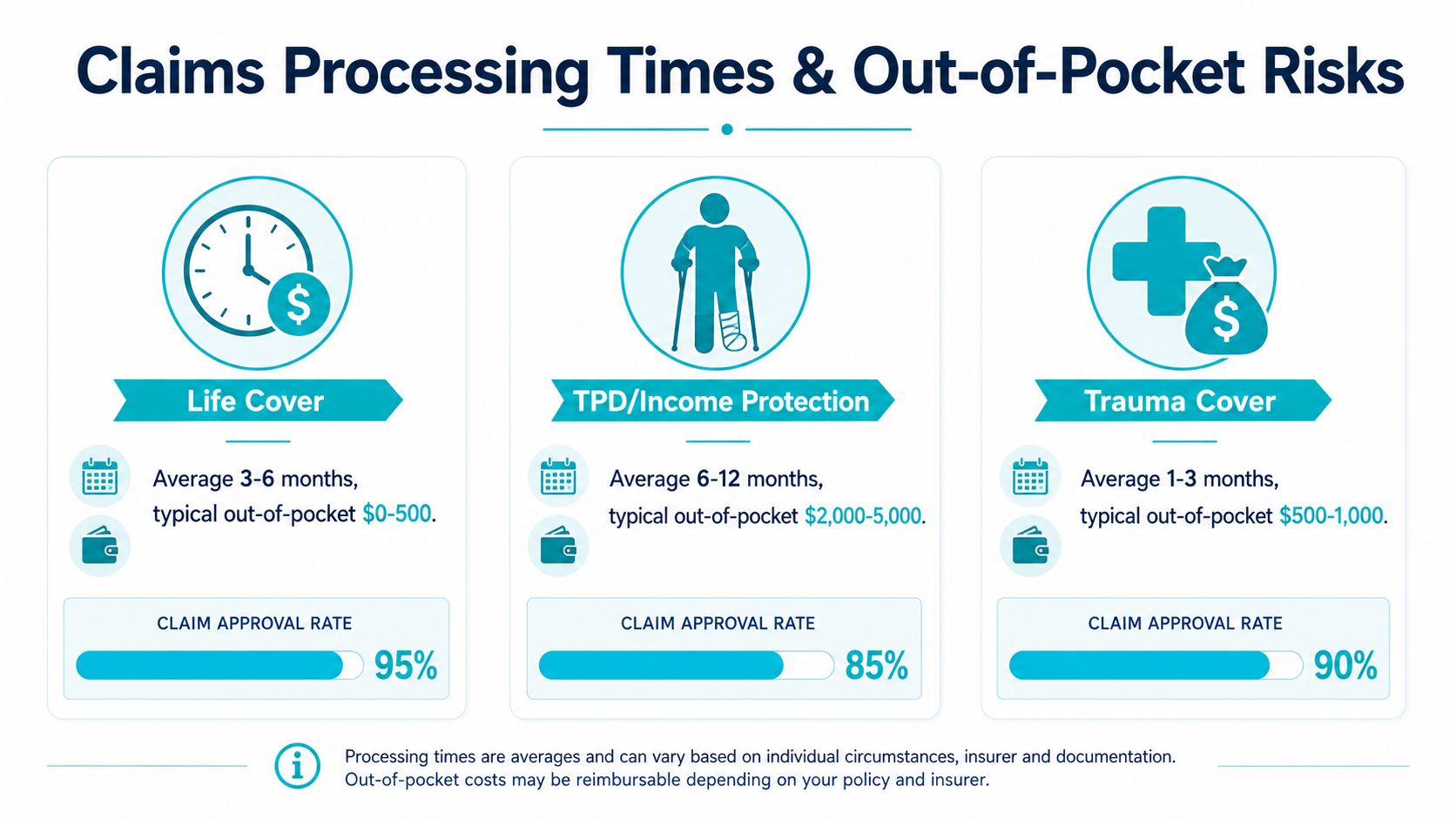
A lengthy assessment period can force a family to draw on accessible savings while regular expenses continue. APRA-regulated claims data reported an average 7.3 months for a TPD claim to be accepted in 2024. (InsuranceWatch claims statistics)
Plan for that cash-flow risk before relying on the policy. Standalone cover can offer different ownership and servicing arrangements, but the wording remains decisive. Compare the combined structure for sufficient cover, control and liquidity, rather than choosing solely by where the policy is held.
Understanding Claims Timelines and Out-of-Pocket Risks
A low premium can hide a serious claims problem. Restrictive definitions, long waiting periods and an inadequate sum insured can leave a dual-income household paying for the shortfall when income or health changes.
Death claims are generally processed faster than TPD claims. TPD assessments often require detailed medical evidence and may take months, so families should check the policy's definitions, evidence requirements and expected process before relying on it.
Income protection serves a different purpose and follows a different claims pattern. It replaces part of ongoing earnings during illness or injury, while TPD generally addresses a permanent disability through a lump sum. Compare each policy against the cash flow it is designed to protect.
Health insurance can still leave a bill
Private hospital insurance is a separate decision families should evaluate on its own merits: check the selected hospital, doctors, excess, exclusions and available providers against how you expect to use the policy.
Private cover does not guarantee a zero-cost hospital episode. An excess, waiting period, excluded service or provider gap can create an unexpected bill. Ask the insurer and treating providers which costs remain outside the policy before treatment begins.
A March 2025 survey found that one in five Australian families with private hospital insurance had avoided using their cover because of high out-of-pocket costs. In Western Australia, the average gap payment for services was $28.78, rising to $248.33 where a gap was paid. (Choosi Insurance Gap Report 2025)
A policy protects your wealth only when you understand its payment conditions and can meet the costs outside the policy.
Build claims risk into your wealth-protection framework. Review whether your cover provides enough capital, income replacement and control, rather than selecting policies on premium alone. See the superannuation section above for liquidity discussion.
Wealth Collective's information on a TPD insurance claim can help you identify the questions to ask before a crisis.
Your Step-by-Step Family Insurance Checklist
A proper review starts with your household economics, not an online quote. Work through the following steps with both partners present, because the unpaid work and future plans matter as much as current salaries.
Start with the financial consequences
List every fixed commitment. Record the mortgage, personal debts, school costs, childcare, household bills and regular commitments. Don't exclude costs just because they aren't labelled “essential”. A family's stability depends on the full budget.
Calculate lost income. For each adult, ask how long the household could operate if that person died, became permanently disabled or couldn't work for an extended period. Consider salary growth, bonuses, business income and super contributions where they materially support the family plan.
Value unpaid care. Estimate the cost of replacing transport, school pickups, domestic work and day-to-day care. The parent with lower income may still need substantial life, TPD, trauma or income protection cover.
Separate lump-sum and cash-flow needs. Life, TPD and trauma generally address large capital shocks. Income protection addresses ongoing earnings. Use both calculations rather than allowing one policy type to stand in for another.
Audit what you already own
Download the latest super statements and policy schedules. Check the sum insured, ownership, beneficiary arrangements, definitions, exclusions, waiting periods, benefit periods and premium structure.
Look for policies attached to credit cards, mortgages, workplaces or older personal arrangements. Duplicate cover can waste money, while several small policies can still leave a large combined shortfall.
Compare policies on more than price
Ask whether premiums are stepped or level, whether the cover can be adjusted, and whether the policy remains suitable if you change occupation or employer. Compare definitions and claim triggers line by line. A lower premium isn't a saving if it buys materially weaker protection.
Health insurance needs its own check. Confirm the hospital tier, excess, waiting periods, excluded procedures and likely provider gaps. If a large medical bill would force you to borrow, review your emergency reserves alongside the policy.
Make the plan workable
Choose premiums your family can maintain through career changes and market pressure. Set a calendar reminder to review cover after a new child, property purchase, salary change, business launch, relationship change or major repayment of debt.
Families under temporary financial strain should also identify practical support before cancelling protection. Information about utility bill assistance in Australia may help with household cash flow, but cutting essential insurance should be a considered decision, not an automatic response to a difficult month.
Before you apply: Have your income, debts, dependants, super statements, existing policies and medical history organised. Good information produces better advice and reduces avoidable delays.
When to Seek Personalised Financial Advice
DIY research is reasonable when your family has straightforward circumstances, stable employment, no business interests, no blended-family issues and enough time to compare definitions and ownership carefully. You still need to read the policy documents and check that the cover amount reflects the household's real financial exposure.
Personal advice becomes valuable when the consequences of getting the structure wrong are large. Seek help if you have a blended family, significant assets, a self-managed business, complex trusts, irregular income, substantial debt or one partner whose future earning capacity is much higher than today's salary.
The same applies if most of your cover sits inside superannuation. Beneficiary nominations, tax treatment, policy ownership and liquidity can interact in ways that aren't obvious from a statement balance. A family may need a combination of personal and super-held cover, rather than choosing one location for every policy.
Connect protection with wealth building
Insurance shouldn't sit in isolation from your investment and retirement strategy. Excessive premiums can restrict debt reduction or investing, while inadequate cover can force the family to sell assets at the worst possible time. The right structure protects both the household today and the financial independence you're building for later.
Wealth Collective's Protection Plus offering reviews Life, TPD, Trauma and Income Protection cover, then links the recommendations to the family's broader financial position. Its process begins with a complimentary 10-minute discovery call, followed by a deeper assessment and implementation support where appropriate.
Book that conversation when you're unsure, not only after a major life event. A short review can reveal whether default super cover is enough, whether your beneficiaries are current and whether your income replacement assumptions make sense.
Wealth Collective can review your family's Life, TPD, Trauma and Income Protection arrangements and connect them with your debt, investment and retirement strategy. Visit Wealth Collective to book an initial call and turn scattered policies into a clear wealth-protection plan.