Business hours
Monday to Friday (8.30AM - 5PM)
Weekend (Closed)



The non-concessional contributions age limit is generally under 75, with a strict acceptance window ending 28 days after the end of the month in which you turn 75. Since 1 July 2022, you don't need to satisfy the work test to make these after-tax contributions.
You may be approaching retirement with cash from a property sale, business exit, inheritance or years of disciplined saving. The obvious question is whether you can still move that money into super before the opportunity closes. The answer depends on more than your birthday. You need to coordinate your age, the financial year, your available cap, your total super balance and the fund's processing timetable.
Missing the deadline can mean the fund returns the contribution, while contributing too much can create an excess contribution problem. The rules are manageable, but they reward organised action rather than last-minute transfers.
Understanding the Non Concessional Contributions Age Limit
A client turning 75 often assumes the door to voluntary super contributions closes on their birthday. That isn't quite right. The practical rule is more precise. A fund can generally accept non-concessional contributions during the period ending 28 days after the end of the month in which the member turns 75, subject to the fund's rules and the contribution type. The Australian Taxation Office contribution cap guidance confirms that compulsory employer contributions and downsizer contributions can still be accepted after this point, but voluntary non-concessional contributions are generally restricted.
The rule matters because a large after-tax contribution can strengthen the pool used to fund retirement. Unlike a personal concessional contribution, an NCC is made from money that has already been taxed personally. The strategic question is whether you can place available capital into the super environment while you remain eligible, not whether you can claim a deduction.
The age rule in practical terms
Since 1 July 2022, people aged 67 to 74 generally don't need to meet a work test to make NCCs, as explained in guidance on the removal of the work test. That change is particularly important for retirees, business owners who have stopped working and couples where one partner has already retired.
The age cut-off still controls fund acceptance. It doesn't matter that you have cash available if the trustee receives the contribution after the permitted window. Bank transfer timing, incorrect payment references and fund processing delays can all create problems.
Practical rule: Treat the 75th birthday as a planning deadline, not as the date you start planning.
What this guide helps you decide
Start by identifying whether your contribution is concessional or non-concessional. Then calculate your annual cap, test whether the bring-forward arrangement is available and check your total super balance. Finally, confirm the fund's receipt and allocation process well before the acceptance window closes.
For a plain-English explanation of the underlying strategy, read what non-concessional contributions are. The right approach isn't to contribute as much as possible. It's to contribute the amount you can legally use, at the time your retirement plan can support.
Categorising Super Contribution Types by Age
Super contributions fall into different categories, and the distinction affects both tax treatment and eligibility. Concessional contributions generally include employer contributions, salary sacrifice and personal contributions for which you claim a deduction. Non-concessional contributions are after-tax amounts, such as personal cash savings transferred into super without claiming a tax deduction.
Confusing the two can lead to the wrong strategy. Someone aged over 67 might believe they can't contribute because they've stopped working, when the work test issue may only affect their ability to claim a deduction on a personal concessional contribution. The rules for an after-tax NCC are different.
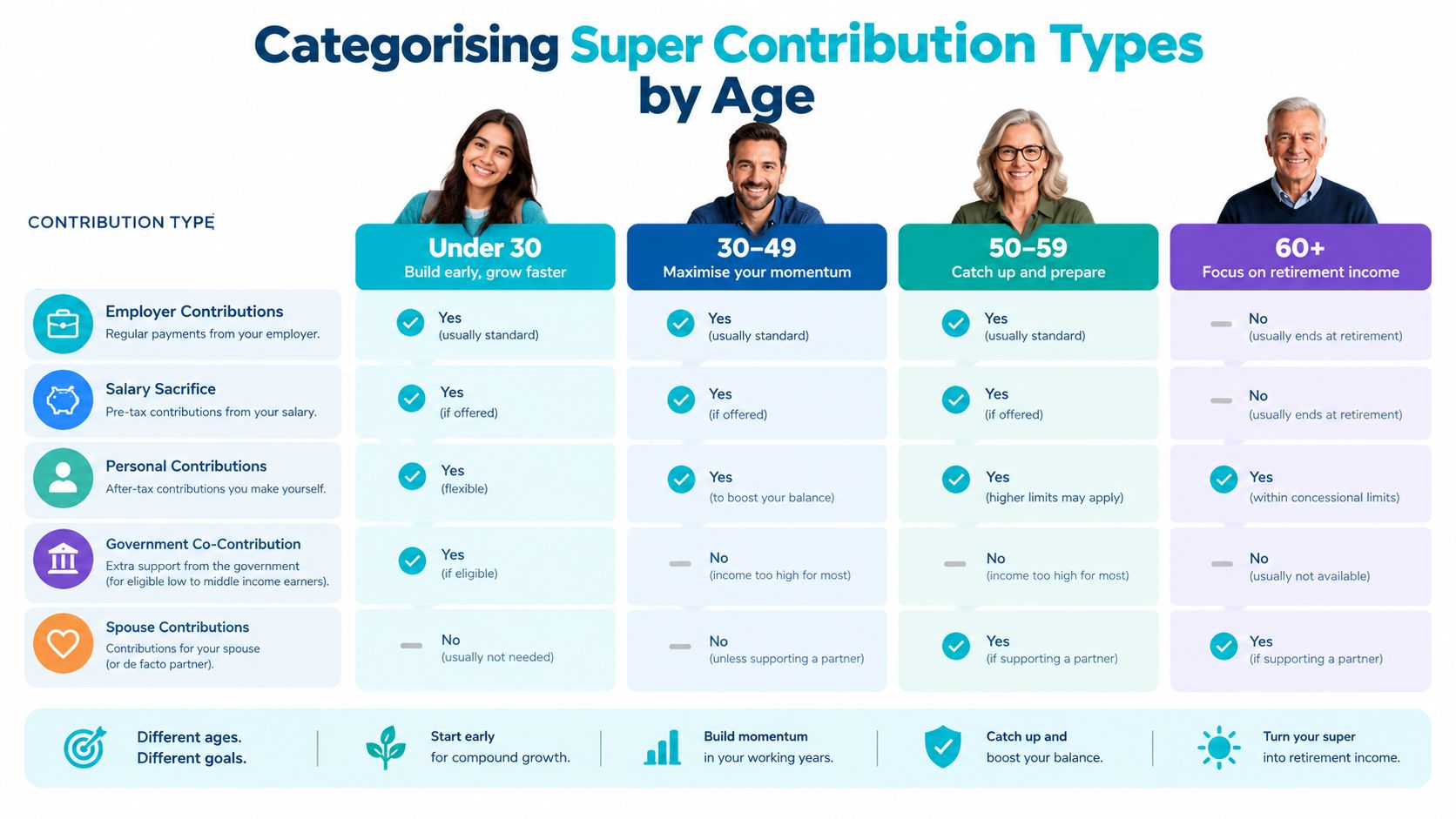
Concessional contributions
Concessional contributions enter super before personal income tax is applied to the individual. Salary sacrifice is a common example. Employer contributions are another. For a person aged 67 to 74, a work test can still matter if they want to claim a tax deduction for personal concessional contributions, as the Australian Taxation Office explains.
That creates an important planning divide:
- Personal after-tax payment: An NCC can generally be made without working, provided the member meets the age, cap, balance and fund acceptance requirements.
- Personal deductible payment: A deduction requires the relevant work test conditions to be satisfied.
- Employer payment: An employer contribution follows its own compulsory contribution and fund acceptance rules.
Non-concessional contributions
NCCs use after-tax money and don't produce a personal tax deduction. Their attraction is the ability to move personal capital into super for retirement investing, provided the member has sufficient cap space and isn't excluded by their total super balance.
The non concessional contributions age limit therefore answers only one part of the question. You must also ask what type of payment you're making, whether the fund can receive it and whether the amount fits within your available contribution capacity.
The payment label matters. A salary sacrifice arrangement and a personal after-tax lump sum aren't interchangeable, even when they end up in the same super account.
Detailed Rules for the Bring Forward Arrangement
A pre-retiree who reaches 75 late in a financial year may still have a narrow opportunity to bring forward unused non-concessional contribution capacity. The strategy works only if you meet the eligibility rules and your fund receives the contribution within its acceptance window.
The annual NCC cap is $130,000. An eligible member may bring forward up to two future years, allowing a maximum three-year contribution of $390,000, subject to the applicable balance and eligibility conditions set out in ATO bring-forward guidance.
Age determines whether you can start the arrangement. If you are under 75 at any time during the financial year, you may qualify. If you are 75 for the entire financial year, you cannot begin a new bring-forward arrangement.
How the timing works
Suppose you hold a substantial amount of personal capital and remain under 75 during the relevant financial year. You may contribute within the annual cap, or activate the arrangement and use up to three years of available cap space earlier. Once activated, future capacity is consumed in advance, so the contribution must fit your cash needs and retirement plan.
The birthday date alone does not settle the issue. Check whether you were under 75 at any point in the financial year, whether you have already used a bring-forward arrangement and whether the trustee can legally accept the payment.
| Age at 1 July | Bring-Forward Period | Maximum Contribution Limit |
|---|---|---|
| Under 75, subject to eligibility | Up to three financial years | $390,000 |
| Under 75, with only one future year available | Up to two financial years | $260,000 |
| Under 75, annual cap only | No bring-forward period | $130,000 |
| 75 for the whole financial year | Not available | $0 under the arrangement |
The $260,000 two-year amount reflects the reduced entitlement where only one future year of cap space is available, under the bring-forward rule guide.
These figures describe the framework, not your personal entitlement. Existing NCCs, previous bring-forward use, your total super balance and the fund's acceptance rules may reduce the amount available.
What to check before contributing
Calculate your remaining NCC capacity before transferring a lump sum. Confirm the contribution date, your age status for the financial year and the trustee's processing requirements. A large payment is not automatically valid because it falls below the headline maximum. Get written confirmation from the fund, then retain the transaction records and confirmation of receipt.
Navigating the Work Test Exemption for After Tax Contributions
Retiring after age 67 does not automatically close the door on after-tax super contributions. Since 1 July 2022, Australians aged 67 to 74 generally do not need to meet the work test to make non-concessional contributions, even if they have stopped working, as confirmed by ATO guidance on the work test.
That change matters when you are timing a final injection of personal savings into super. It can support a business owner selling or winding down an enterprise, a retiree holding excess cash outside super, or a couple where one partner keeps working while the other has retired. The strategic question is whether you can complete the contribution while the fund can still accept it, then use the available NCC cap and any eligible bring-forward period.
Contribution eligibility is separate from deductibility
The work test applies differently to personal after-tax contributions and personal contributions claimed as deductions. A person aged 67 or more may be able to make an NCC without employment income, but that does not automatically permit a deduction for a personal concessional contribution.
| Question | Non-concessional contribution | Personal concessional contribution |
|---|---|---|
| Is the payment made from after-tax money? | Yes | It may be, if a deduction is claimed |
| Is the work test generally required for a person aged 67 to 74? | No | It can be required for deductibility |
| Does the contribution use NCC cap space? | Yes | No, it uses concessional capacity |
| Does the payment create a personal tax deduction? | No | Potentially, if the rules are satisfied |
Set the strategy according to the outcome you want. To move existing savings into super, retirement status may not prevent an NCC. To reduce taxable income through a personal deduction, confirm the separate eligibility rules before contributing.
Where the exemption helps
A retiree with cash outside super can use the exemption to place money into a retirement structure, provided the contribution remains within the applicable cap and the fund accepts it. A spouse who has stopped working may also receive a spouse contribution, subject to the receiving fund's rules, contribution limits and the wider retirement plan.
The exemption removes the work requirement for eligible NCCs. It does not remove the age rules, cap restrictions or the fund's acceptance deadline. Confirm the trustee's process, arrange payment early enough for processing, and coordinate the contribution with your bring-forward position and final acceptance window.
Managing the 28 Day Fund Acceptance Window
The 28-day rule is an operational deadline, not a planning suggestion. A fund may generally accept voluntary non-concessional contributions until 28 days after the end of the month in which the member turns 75, based on technical guidance on NCC acceptance.
Consider a member who turns 75 in August. The relevant month ends on 31 August, and the permitted period then runs for 28 days after that month ends. In practical terms, the member has until late September for the fund to receive many voluntary contributions. Starting a transfer in late September is dangerous because the fund needs to receive the money, identify it correctly and process it within the permitted period.
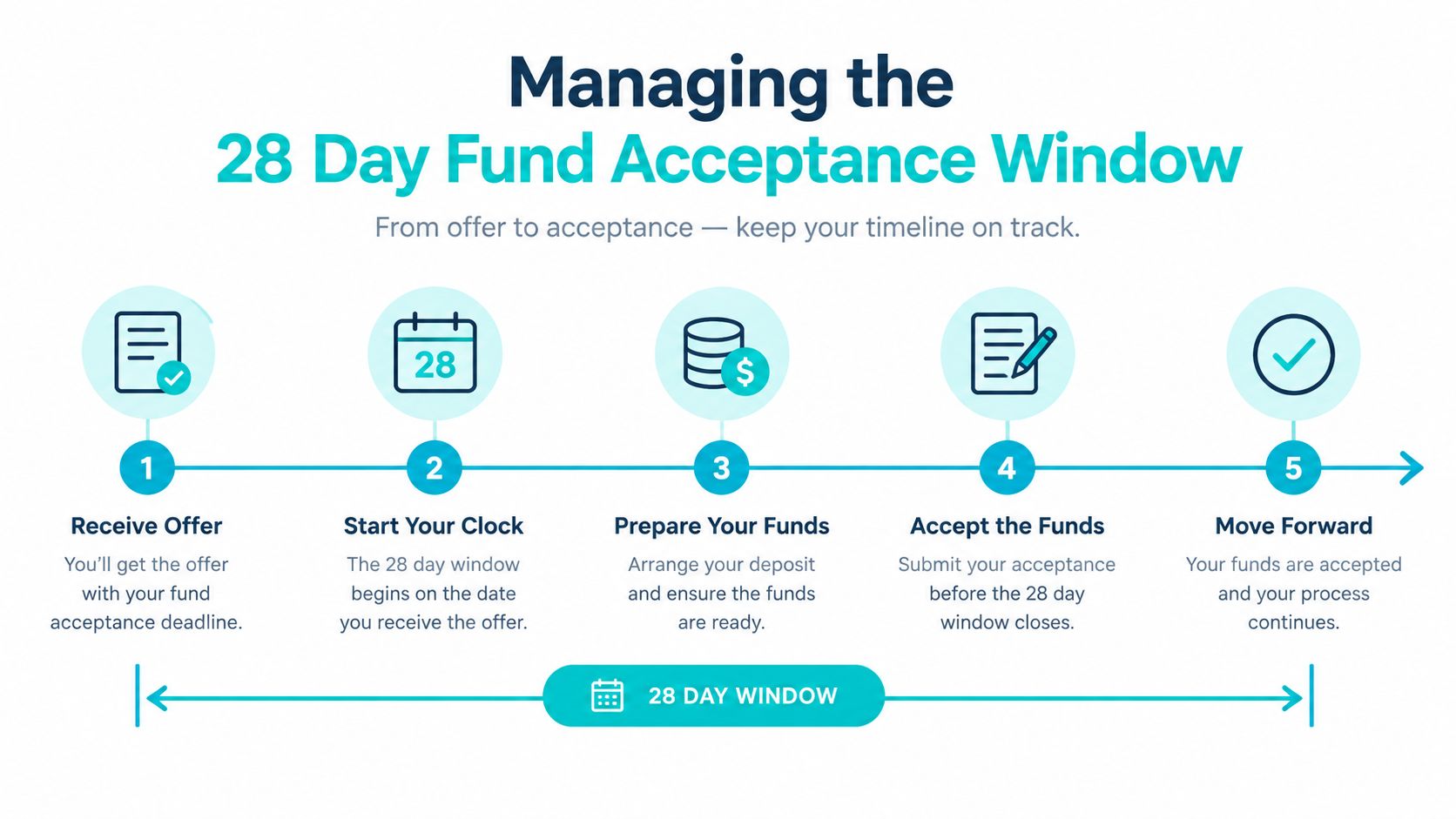
Why late transfers fail
A member might instruct their bank to send the money, assume the transfer is immediate and wait for the account balance to update. The fund may instead require a specific electronic payment reference, supporting documentation or additional identity checks. If the amount arrives after the deadline, the trustee must return it within 30 days, according to the MLC technical summary.
The returned money may leave you with an unwanted cash-management problem. You may also lose the ability to use the intended NCC or bring-forward capacity once the age window has closed.
The deadline applies to fund receipt and acceptance. Your intention to contribute isn't enough.
A safer timeline
Start before the birthday month. Ask the fund for its contribution instructions, confirm the payment method and request written confirmation of the date on which it considers a contribution received. Keep evidence of the transfer and check that the fund has allocated the money correctly.
If the contribution comes from a property sale or business transaction, allow time for settlement and cleared funds. Don't rely on a same-day transfer when the consequence of delay is rejection. The final step is to check the fund statement and obtain trustee confirmation rather than assuming the transaction succeeded.
Total Superannuation Balance Thresholds and Restrictions
Age doesn't provide an automatic right to contribute. Your total superannuation balance, or TSB, can restrict NCC eligibility even when you're comfortably under 75. The balance is assessed using the relevant value at the end of the previous financial year, and the result can affect both your general NCC cap and your access to bring-forward capacity.
That makes the age question only half the analysis. A member may be young enough, still have cash available and have never used bring-forward, yet have no NCC capacity because their TSB has reached the applicable threshold.
Why the balance check matters
The TSB is considered across your super interests rather than being assessed fund by fund. That means holding accounts with an industry fund, retail fund and SMSF doesn't create separate NCC capacity. Your complete super position matters.
You also need accurate information. Pending rollovers, pension interests and other relevant amounts can affect the calculation. A fund balance viewed on a banking app may not provide the complete figure needed for contribution planning.
The Wealth Collective guide to the non-concessional contributions cap provides useful background, but your adviser or fund should confirm the current calculation before you move substantial money.
Coordinate age and balance decisions
A contribution strategy should begin with a balance snapshot, not a target amount. Establish the TSB used for the relevant assessment date, review prior NCCs and check whether a bring-forward arrangement is already active. Then determine whether the planned contribution fits the available capacity.
Some strategies may involve coordinating pension commencements, spouse arrangements or rollovers, but these choices have broader tax, cash-flow and retirement-phase consequences. Don't manipulate the timing of a transaction solely to preserve NCC space without understanding the effect on your retirement income plan.
Decision point: If your TSB leaves no NCC capacity, changing the contribution amount won't solve the problem. You need to review the broader super and retirement structure.
Executing a Compliant Contribution Strategy
A compliant strategy starts with documentation and ends with confirmation. Treat a large NCC like a controlled transaction, not an ordinary bank transfer. The objective is to place the right amount into the right fund before the permitted date, with evidence that the trustee received and accepted it.
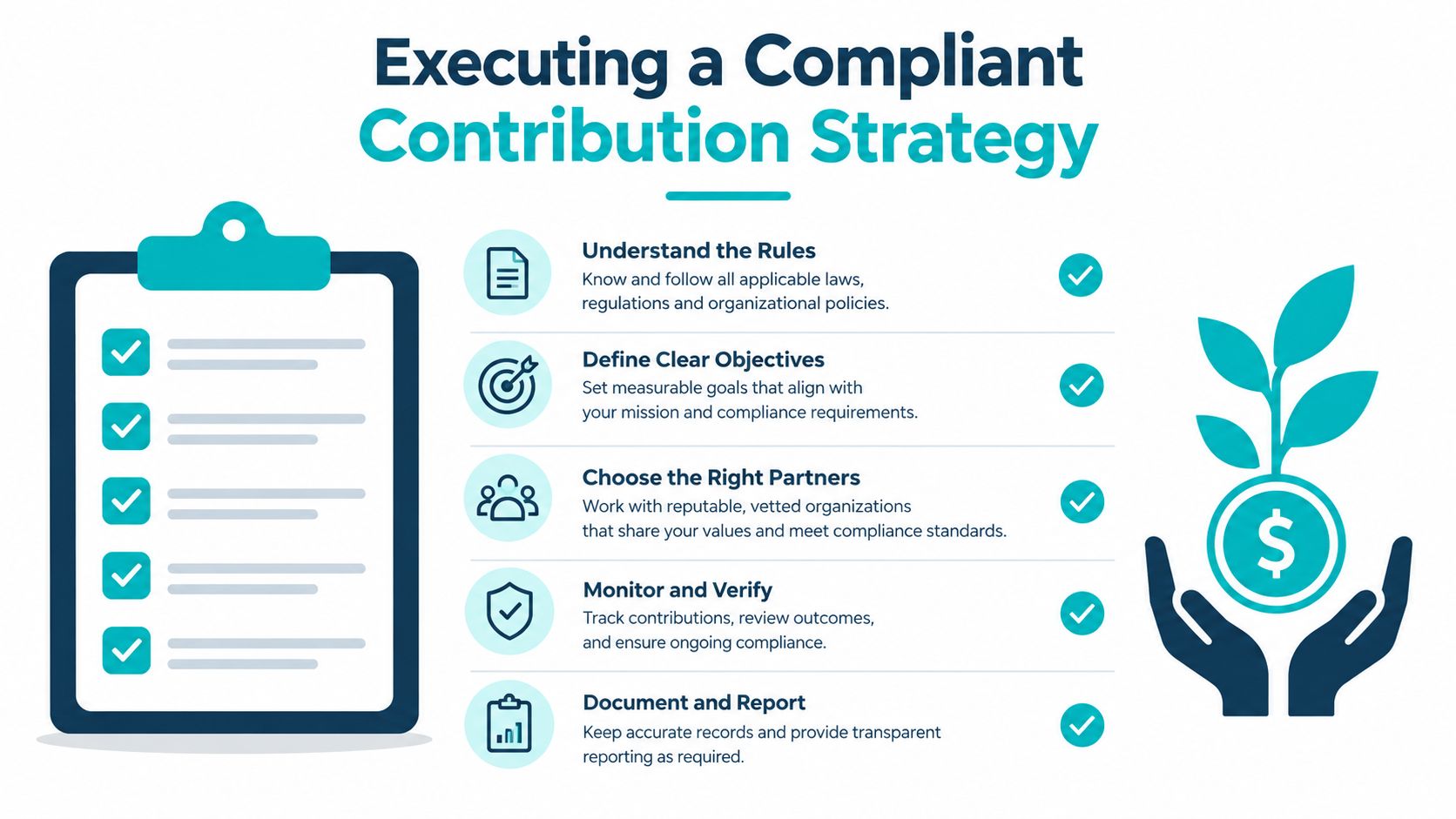
A practical execution checklist
Confirm eligibility first. Check your age for the financial year, TSB, prior NCCs and any existing bring-forward arrangement. If one factor is uncertain, pause the payment until the fund or adviser confirms the position.
Choose the correct contribution type. Decide whether the payment is an NCC, concessional contribution, spouse contribution or another accepted category. Don't describe an after-tax lump sum as deductible unless the relevant requirements have been tested.
Obtain fund instructions. Ask the trustee or fund administrator for payment details, references, forms and cut-off times. SMSF members should document the trustee decision and preserve the bank evidence.
Allow processing time. Have the money cleared and allocated before the 28-day window closes. A contribution that leaves your personal account but hasn't reached the fund may not protect your eligibility.
Verify the result. Request written acknowledgement, check the account transaction and retain the statement, payment receipt and correspondence with your tax records.
Consider alternative pathways
A downsizer contribution may be relevant after an eligible property sale, while spouse contributions can support a couple's broader retirement structure. These pathways have different eligibility conditions and should be assessed separately rather than used as a workaround without advice.
A property sale or business exit can create a large cash balance at exactly the point when timing matters most. Before settlement, model the amount you need for debt repayment, tax, living costs and contingency reserves. Only then decide how much, if any, should enter super.
Securing Expert Guidance for Retirement Wealth
DIY super decisions become risky when several rules apply to the same payment. The age cut-off, 28-day acceptance window, annual cap, bring-forward arrangement and TSB can each change the result. A mistake may not be obvious until the fund rejects the contribution or the ATO identifies excess capacity.
You also need to connect the contribution with the retirement plan. Moving money into super may improve the long-term tax position, but it can reduce liquidity and may affect pension timing, investment selection and estate planning. A contribution is successful only when it supports the life you intend to fund.
Why advice should begin before the deadline
An adviser can coordinate the calculation, fund communication and transaction timetable. That process is particularly valuable when your money comes from a property sale, inheritance or business exit, because the capital may arrive close to the age acceptance deadline.
Wealth Collective's Retirement Roadmap service is designed to connect superannuation optimisation with retirement income, investments, debt and wealth protection. Its advisers work with clients in Western Australia to turn complex super rules into an organised plan fitted to their circumstances.
The right advice should answer practical questions:
- How much can I contribute? Confirm available NCC and bring-forward capacity.
- When must the fund receive it? Build a timetable around your birthday and the fund's processing requirements.
- What happens after the contribution? Align the investment and retirement-income plan with the new super balance.
- What should remain outside super? Preserve enough liquidity for expenses, contingencies and known commitments.
Don't wait until the birthday month to start. A short initial conversation can identify whether the issue is urgent, whether a contribution is viable and which documents you need before proceeding.
Quick Reference Guide and Frequently Asked Questions
A contribution arriving near your seventy-fifth birthday can determine whether you use available after-tax capacity or miss the opportunity. Set the timetable first, then confirm the fund's acceptance process and your remaining contribution room.
- General NCC cap: The annual non-concessional contributions cap is $130,000, as set out in ATO rates and thresholds.
- Maximum bring-forward amount: An eligible person under 75 may potentially use three years of cap space, allowing $390,000 in total.
- Age condition: You must be under 75 at some time during the financial year to potentially use the bring-forward arrangement.
- Post-75 acceptance: Many voluntary NCCs can generally be accepted until 28 days after the end of the month in which you turn 75. This is a fund-receipt deadline, not merely the date you initiate payment.
- Return deadline: If the trustee receives a contribution after the permitted deadline, technical guidance says it must be returned within 30 days.
- Work test: Since 1 July 2022, the work test generally has not been required for NCCs made by people aged 67 to 74. It can still matter when claiming a deduction for personal concessional contributions.
What happens if my fund rejects a contribution after the 28-day window?
The trustee should return the contribution within the required period rather than retain it as an NCC. Contact the fund immediately, request written confirmation of the rejection reason, and keep evidence of both payment and return. Do not resend the money until you have confirmed your legal capacity to contribute and checked the applicable rules.
Does the age limit apply differently to SMSF trustees?
SMSF trustees receive no special exemption. The same contribution rules apply, while the trustee must also accept contributions correctly, record the decision and retain compliance evidence. If you are both member and trustee, document your personal contribution intention separately from the trustee's decision to accept the payment.
Does the age limit stop me starting a tax-free retirement phase pension?
The NCC age limit controls whether you can make that contribution. It does not, by itself, prevent you from starting a retirement phase pension. Pension commencement has separate eligibility, transfer balance and pension-account rules, so assess both decisions together.
Founders managing a business sale or retained company wealth may benefit from a broader financial strategy guide for founders, particularly where personal and business decisions affect retirement capital.
Rules and thresholds can change. Confirm the current requirements before acting. Wealth Collective provides retirement planning, superannuation optimisation and structured advice through its Retirement Roadmap process. Visit Wealth Collective for an initial conversation about your age window, contribution capacity and fund timetable.