Business hours
Monday to Friday (8.30AM - 5PM)
Weekend (Closed)



You've got a mortgage, money going into super and an insurance premium somewhere on your statement. Your partner earns an income too, so you're wondering whether you really need income protection insurance and life insurance, or whether you're paying twice for the same thing.
You're not. These policies address different financial problems. The sensible decision starts with who relies on your earnings, how long you could manage without them and what your household would need if you didn't come home. That's the starting point for a Protection Plus review, not a comparison of the cheapest premiums.
What Each Cover Actually Pays Out
A dual-income household can look financially secure while both people are working. Remove either income and the mortgage, groceries and childcare still need paying. Whether that person is recovering from illness or has died determines which insurance responds.
Income protection generally pays a regular benefit replacing part of your earnings when illness or injury prevents you from working. It protects your capacity to keep funding everyday life while you're alive. It isn't a promise to replace your entire salary, and being away from work doesn't automatically establish eligibility.
Life insurance, meaning death cover in this comparison, generally pays a lump sum following death. It supports the people left behind, whether that means reducing debt, funding living expenses or giving a surviving partner financial breathing room. Who receives the payment depends on the policy's ownership and beneficiary arrangements.
Keep disability cover separate
Clients often use “life insurance” as shorthand for every personal insurance policy. That makes it harder to see what's missing.
- Total and permanent disability insurance addresses severe or permanent impairment. Don't assume an extended absence from work meets its definition.
- Trauma cover addresses specified medical events under the policy's wording. It isn't interchangeable with either earnings replacement or death cover.
- Income protection and death cover solve different household funding needs. Holding one doesn't remove the need to assess the other.
Australia's insurance system helps explain the confusion. There were approximately 14 million group policies, compared with 4 million retail policies and 3.9 million direct policies, in 2015, while 29 life insurers operated as at September 2017, according to the parliamentary review of Australia's life-insurance industry.
Those are historical figures, not today's market totals. They show why many Australians first encounter insurance through super rather than through a deliberate personal insurance plan.
Start with the financial loss: If you're unable to work, who pays this month's bills? If you die, who funds the household's future?
Answer those questions before discussing product names. You'll make a clearer decision and avoid buying cover because it appears on a super statement.
Side-by-Side Comparison of the Two Covers
Choose the benefit you need before choosing the policy. A recurring payment and a lump sum aren't competing versions of the same product. They belong in different parts of your financial plan.
Income protection vs life insurance at a glance
| Criterion | Income Protection | Life Insurance |
|---|---|---|
| Trigger event | Illness or injury causing incapacity under the policy definition | Death under the policy terms |
| Benefit shape | Generally a recurring monthly payment | Generally a lump sum |
| Benefit amount | Linked to insured earnings and policy limits | Agreed sum insured, subject to policy terms |
| Payment duration | Limited by continuing eligibility and the benefit period | A final death benefit, not an ongoing benefit period |
| Tax treatment | Distinguish premium deductibility from taxable benefits | Distinguish premium treatment from the recipient's tax position |
| Typical ownership | Personally owned or held through super | Personally owned or held through super |
| Portability | Check continuation rules when work or fund arrangements change | Check whether cover survives changes to the relevant arrangement |
Where clients misread the comparison
Income protection isn't a standing monthly allowance once a claim is accepted. Payments depend on continuing eligibility. Returning to full work generally ends the earnings-replacement need, while a gradual return requires checking the policy's partial-capacity provisions.
Life cover has no comparable benefit period because the death payment is final. Your planning task is to work out how that capital should support the household, rather than expecting the insurer to keep paying its bills.
Ownership also changes the decision. Compare who controls the contract, how a claim reaches the intended recipient and what happens when your employment or super arrangements change. The tax implications need a separate review, not a quick assumption based on the policy's label.
For another way to frame long-term earnings risk, Copeland Insurance Agency's disability insurance options provide an overseas comparison resource. Don't treat overseas terminology or product conditions as Australian policy advice.
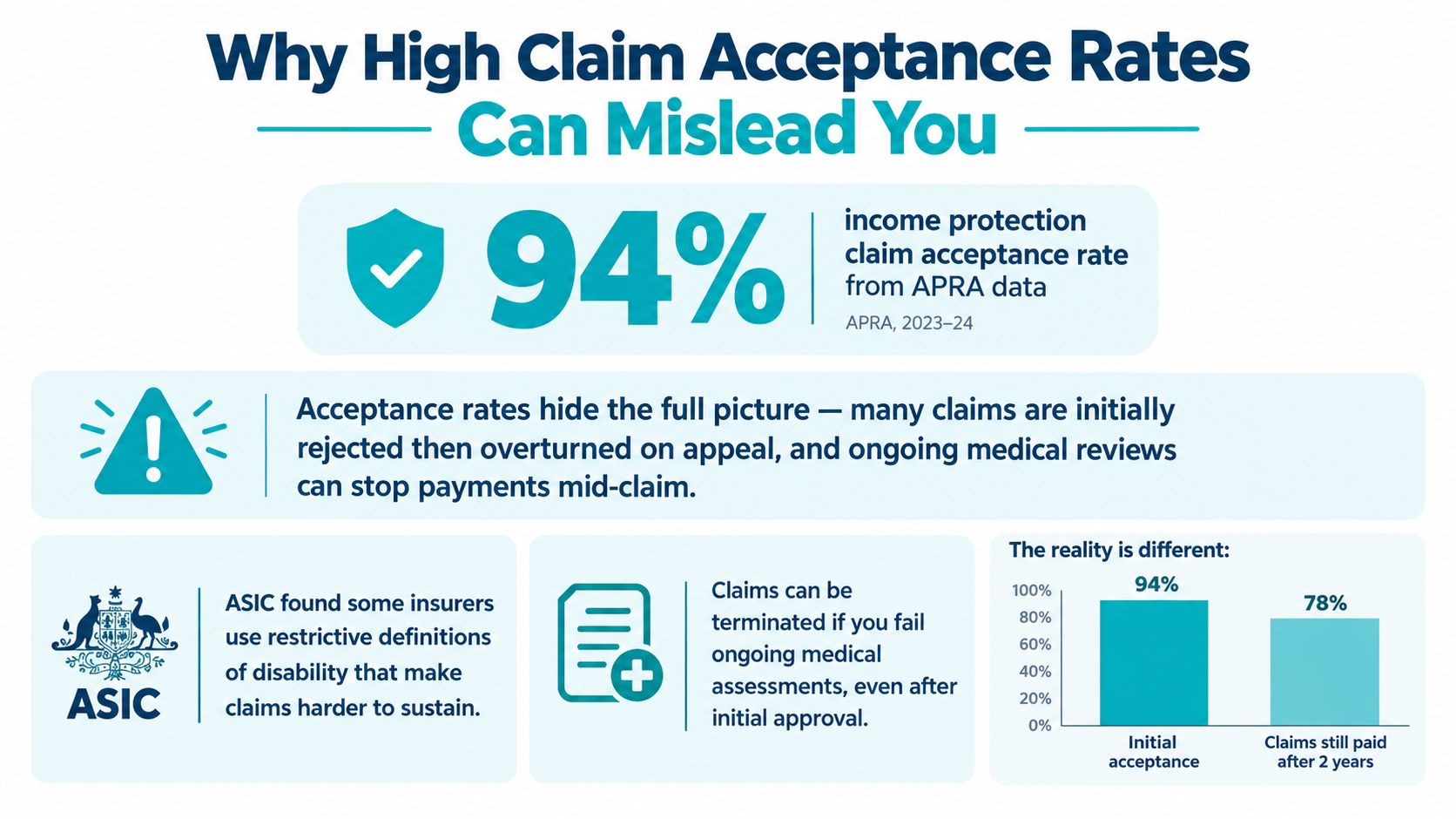
The graphic below highlights claim acceptance as a comparison issue. Treat its illustrative figures and generalised assertions as prompts for questions, not verified Australian benchmarks; use the dated claims evidence and your actual policy wording for decisions.
A feature table can organise your options. It can't tell you whether your savings will last until a payment arrives or whether a disability definition fits your occupation. Those are the questions that turn comparison into advice.
Why Claim Acceptance Numbers Can Mislead You
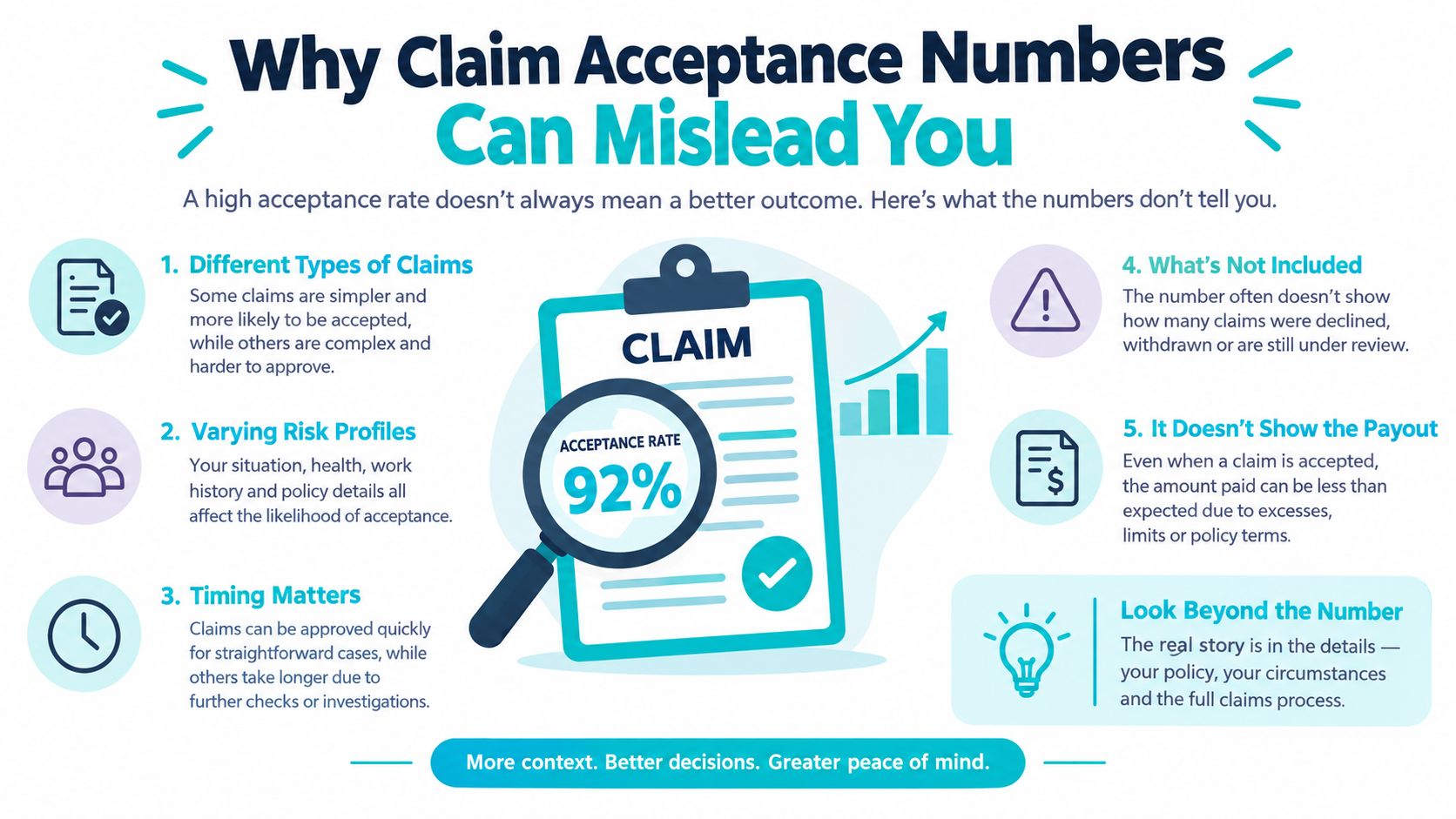
An accepted claim isn't the same thing as an easy claim. You can have a valid entitlement and still face paperwork, medical evidence requests and uncertainty about when money will reach your account.
APRA-reported 2024 market figures summarised by Insurance Watch show acceptance rates of approximately 96.9% for life insurance and 95.0% for income protection, average acceptance times of 1.3 months and 1.6 months respectively, and an income-protection acceptance range of 91.0% to 97.8%, in its Australian insurance claims statistics.
Those figures measure acceptance, not a guarantee of your first payment date. Don't turn an industry average into a household cash-flow forecast.
Look beyond the headline percentage
Income-protection claims generally involve ongoing medical and occupational assessment. Death claims usually involve a more clearly defined event. For mental-health or stress-related incapacity, ask how the insurer assesses functional limitations, what evidence it requires and how it reviews continuing eligibility.
For the reporting period ending December 2025, the APRA/ASIC dataset recorded 94.4% acceptance for advised income-protection claims and disability-income dispute rates of 315 per 100,000 lives for advised business and 446 per 100,000 for non-advised business, in the latest life-insurance claims and disputes release. These are different reporting periods and measures, so don't read them as a simple trend comparison.
Ask for practical answers:
- Evidence requirements: Which medical reports and income records will you need?
- Ongoing reviews: What must you demonstrate to remain eligible?
- Payment adjustments: Which offsets or rehabilitation conditions could affect benefits?
- Claims support: Who will help organise documents and follow up unresolved requests?
A high acceptance rate doesn't pay your mortgage while you're waiting for assessment.
An adviser can help you understand requirements and coordinate a claim. That's useful administrative support, not a guarantee of approval or evidence that every advised policy delivers a better outcome.
The Three Mechanics That Decide Real-World Value
A larger monthly benefit won't rescue a policy with an unsuitable waiting period or disability definition. Waiting period, benefit period and definition of incapacity deserve more attention than optional extras.
ASIC's MoneySmart says waiting periods commonly range from 14 days to two years, while benefit periods commonly last two or five years, or continue to a specified age such as 65; you must still be unable to work at the end of the waiting period to qualify, as explained in its income protection insurance guide.
Fund the waiting period with accessible money
Your waiting period is a cash-flow decision. A shorter option generally costs more; a longer option asks you to carry more of the initial financial burden yourself.
For example, comparing a 14-day option with a 90-day option means comparing premium savings against the need to fund roughly three months without insurance income. Don't select the longer wait unless you can cover that interval, and leave room for assessment and payment timing as well.
Build the reserve around actual spending, not your gross salary:
- Essential outgoings: Mortgage or rent, food, utilities and necessary family costs.
- Reliable resources: Accessible savings and confirmed leave entitlements.
- Additional pressure: Treatment costs and any reduction in your partner's working capacity.
Don't count money already earmarked for another obligation as emergency funding. Nor should a household budget depend on selling an investment at a convenient price.
Match duration and definitions to your working life
A shorter benefit period generally lowers the premium, but you retain the risk of being unable to earn after it expires. Cover extending towards retirement is more expensive because you're transferring more long-term earnings risk to the insurer.
Choose deliberately. If recovery or retraining could take longer than the benefit period, identify how you'd fund the remaining gap before accepting the cheaper option.
The definition of incapacity determines whether your work limitations qualify. Ask which duties the insurer assesses, whether that test changes during a claim and how exclusions affect your particular occupation and medical history.
You should also understand how earnings are established. The agreed-value versus indemnity income protection explanation is a useful starting point for reviewing that distinction.
Within a Protection Plus review, these settings should be tested against your household budget and working horizon. They shouldn't be chosen because a quotation looks affordable.
Tax Treatment and Why Ownership Matters
A tax deduction is a discount on an expense, not a reason to buy the expense. Start with appropriate protection, then work out the most suitable way to own and fund it.
The ATO states that personally paid premiums for insurance against lost employment income are generally deductible, replacement salary or wage benefits must be included in your tax return, and life, trauma and critical-care premiums aren't deductible; it also excludes a personal deduction for premiums deducted through super contributions in its income protection tax guidance.
That distinction matters on both sides of the policy. You need to assess the after-tax premium cost and the after-tax claim benefit, not just the amounts printed on the quotation.
Work through the outcome without assuming a tax rate
Consider a salaried professional paying an eligible income-protection premium personally. A deduction reduces taxable income, so the effective premium cost depends on that person's tax position. If they later claim, the earnings-replacement benefit becomes taxable income, leaving less available for household spending than the gross benefit suggests.
Now consider funding cover through super. The immediate premium doesn't come from the household bank account, but the member still bears a cost through retirement funding. They shouldn't assume they can claim that premium personally or that the benefit arrives tax-free.
For life cover, don't apply the income-protection deduction rules. Check the recipient, ownership structure and applicable tax treatment before assuming every death benefit has the same net value.
For broader deduction questions alongside your accountant's advice, the Nanak Accountants and Associates tax guide offers general context. Use the ATO's insurance-specific guidance and your own circumstances to settle the insurance treatment.
Compare control and funding together
The ownership decision should answer practical questions:
- Personal affordability: Can you maintain premiums from household cash flow?
- Retirement impact: What does funding premiums through super mean for your savings?
- Recipient arrangements: Will the intended person receive the benefit through the expected process?
- Net protection: Does the expected after-tax payment meet the need you identified?
The guide to whether life insurance is tax deductible can help you separate death-cover questions from earnings-replacement questions.
Ownership rule: Don't choose a structure solely because it makes the premium less visible.
Protection Plus should bring the insurance decision together with tax and super considerations. A structure that suits your cash flow today still needs to support the people and goals you're protecting.
Is Your Super Cover Really Enough
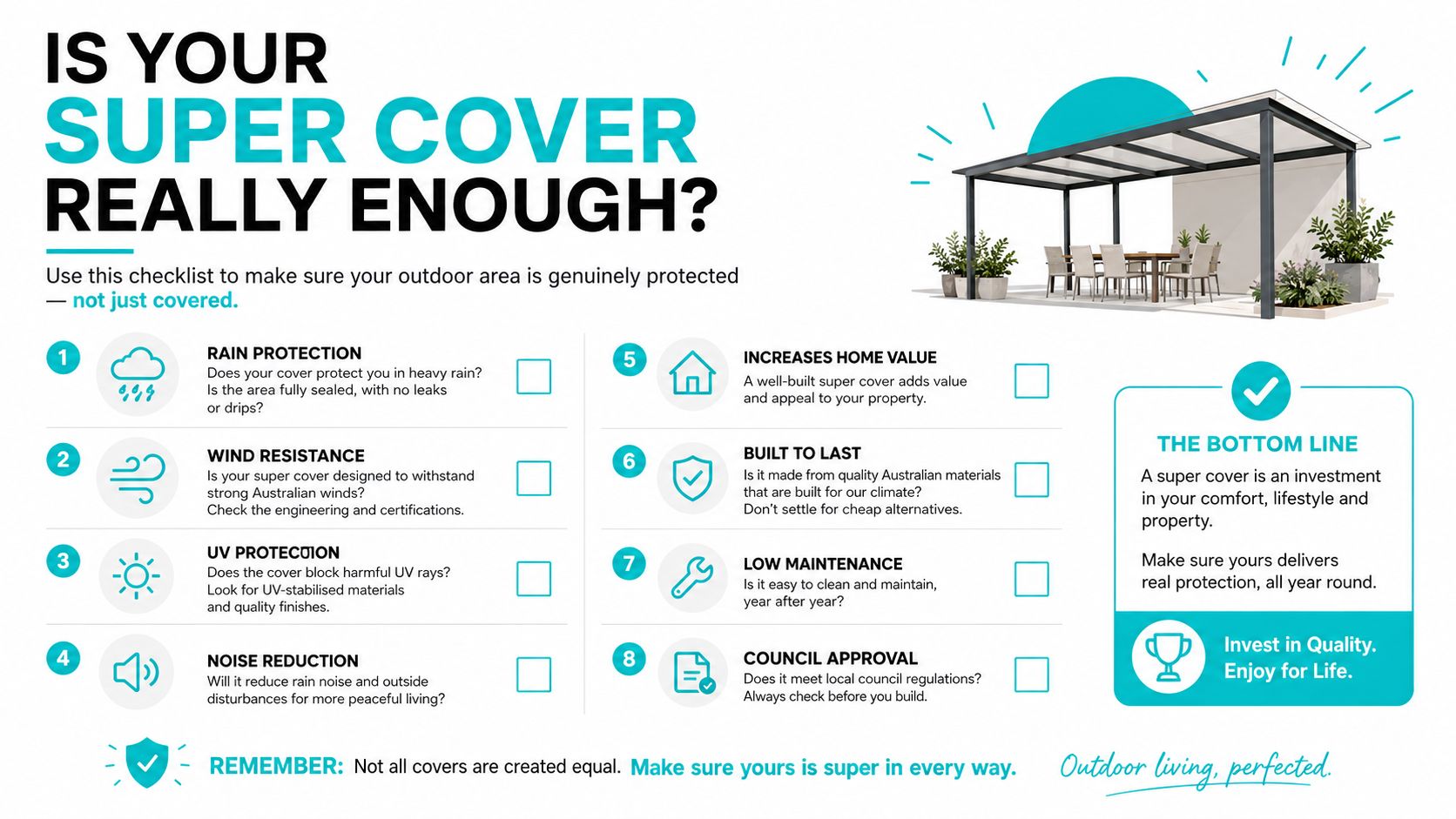
A fund statement from last year can't confirm what cover you hold today. Check your current insurance before consolidating accounts, changing jobs or cancelling a policy.
The 2019 and 2021 reforms changed when insurance in super could stop, including for accounts with low balances or periods of inactivity. Your own fund records will show whether those changes affected your cover. Don't assume insurance inside super is automatically cheaper or still active.
ASFA estimates the reforms' potential consequences by benefit type. Its insurance and superannuation research reports:
- Accounts: Around 5 million individual accounts lost insurance.
- Death benefits: Approximately 5,000 people a year may miss benefits worth $665–$670 million.
- TPD benefits: Around 11,000 people a year may miss $1.5 billion in payments.
These figures are estimated consequences, not a count of individually assessed and rejected claims.
Audit continuity before changing accounts
Review your cover after a job change, parental leave, career break or move to self-employment. Consolidation can reduce duplicate premiums, but it can also remove cover you meant to keep.
Check your current fund records and policy documents:
- Active status: Ask the fund to confirm which cover is in force.
- Cover amount and definitions: Compare them with your current responsibilities and occupation.
- Beneficiary nominations: Confirm they reflect your wishes and meet the fund's requirements.
- Policy control: Establish who owns the policy and how claim proceeds reach you or your family.
- Continuation conditions: Check what happens if your employment or contributions change, or you consolidate accounts.
- Replacement sequencing: Have new cover accepted and in force before cancelling existing protection.
This six-point audit is more useful than relying on an old statement or a broad claim about cover through super. Ask the fund for written confirmation where the status or terms are unclear.
Keep insurance connected to the wider plan
The life insurance through super guide can help you assess the ownership choice. Leaving cover in super or replacing it with a personal policy should depend on your circumstances, not a default rule.
If premiums compete with debt repayments and emergency savings, use Toya AI's practical debt or savings framework to structure the budgeting discussion. It won't determine which insurance contract you need.
My recommendation is straightforward: preserve continuity first, then improve the structure. A Protection Plus review should establish what cover is active, identify any gaps and sequence changes so you don't create an uninsured period.
When You Need One, the Other, or Both
Your life stage matters more than a generic instruction to buy every cover. Use these starting recommendations, then test them against your debts, available assets and family responsibilities.
Match cover to the people relying on you
- Young professional without dependants: Prioritise income protection if your lifestyle relies on employment earnings. Assess life cover against debts and any financial obligations others would inherit, rather than buying a large amount automatically.
- Dual-income family with a mortgage: Assess both covers for both partners. Don't assume the surviving or working partner could comfortably absorb every financial and caring responsibility.
- Self-employed business owner: Prioritise earnings protection, then assess death cover for household and business-related obligations. Keep the personal protection analysis distinct from business continuity planning.
- High-income earner: Review both according to need. Deductibility can influence ownership, but it shouldn't determine how much insurance you buy.
- Pre-retiree supporting a partner or adult children: Retain protection where a genuine dependency remains. Reduce it deliberately when accessible assets can meet the obligation, not because retirement is approaching.
Super research reported almost 8 million Australians holding insurance through super, with 8,808,140 lives insured for death benefits and an average sum insured of $225,200 at June 2024, in ASFA's research on the success of insurance in superannuation. That average isn't a recommended amount for your household.
Bring the right information to a review
Gather your insurance schedules, super statements, household spending, debts and income records. Write down who depends on you and what has changed since you last arranged cover.
Then have the Protection Plus conversation: establish the need, test existing policies, choose suitable ownership and plan any replacement carefully. This is general guidance; your final recommendation needs to reflect your circumstances and the relevant policy documents.
Wealth Collective offers Protection Plus advice to assess your insurance needs, review policy structures and keep your protection aligned with your circumstances. Visit Wealth Collective to book a free 10-minute introductory call, and bring your current insurance and super statements so the team can help identify the right next step.