Business hours
Monday to Friday (8.30AM - 5PM)
Weekend (Closed)


You're probably staring at a shoebox of receipts, a messy bank feed, and a vague sense that you've missed deductions again. That's the normal late-June panic for a lot of Australian owners, especially when the work has been rolling and the admin got shoved to the back seat.
The problem isn't just compliance. Small business tax deductions are a cash-flow tool, and if you treat them like an annual scramble, you usually leave money on the table. The better approach is to apply the ATO's rules all year, claim what survives scrutiny, and keep proof that holds up if the file gets reviewed.
If you want a simple starting point for keeping the paper trail in order, the guide on track expenses for self employed is a useful reference for building a cleaner system. The main advantage, though, is knowing which expenses count, which ones need apportionment, and which concession can bring forward the benefit instead of making you wait.
Wealth Collective's job is to connect those dots. Deductions only matter if they fit the bigger picture, structure, cash flow, debt, super, and the wealth you're trying to build.
Why Small Business Tax Deductions Matter Year Round
A Perth tradie can spend the last week before 30 June emptying gloveboxes, chasing invoices, and trying to remember whether that new drill was bought for the business or “mostly” for work. That's not bad luck, that's a system problem. The owners who stay calm at tax time usually do one thing well, they track business costs as they happen and make decisions with the ATO rules in mind.
Small business tax deductions matter because they bring the tax benefit forward. Instead of waiting and hoping the numbers sort themselves out later, you use deductions to reduce taxable income in the year the expense is incurred, which can free up cash for stock, wages, equipment, or breathing room.
The bigger shift is mental. Deductions are not a compliance chore you deal with once a year, they are part of how you run the business. If you spend money on a tool, subscription, vehicle running costs, or a work-related course, the key question is not “Can I throw this on tax?”, it is “Does this meet the ATO test, and can I prove it?”
Practical rule: if the expense is part of earning income, keep the record on the day you spend it, not when your accountant asks for it.
That approach also keeps you honest about the grey areas. A home office claim, mixed-use phone bill, or car cost can still be legitimate, but only to the extent the business part can be separated from the private part. If your system can show that split cleanly, you are in a much stronger position when the ATO looks at the file.
A clean deduction strategy sits alongside structure, superannuation, debt management, and business planning, which is where Wealth Collective helps owners think beyond the next BAS or tax return. If you need a deeper refresher on how Australian deductions differ from US-style lists, the ATO-focused deduction framework is the standard to follow, not generic internet advice.
That's the difference between hoping for a refund and managing the result.
How the ATO Decides What Counts as a Deduction
The ATO's test is simple on paper and unforgiving in practice. An expense has to be incurred in carrying on the business, it must not be private in nature, and it must be supported by records. Miss one leg, and the claim gets shaky fast.
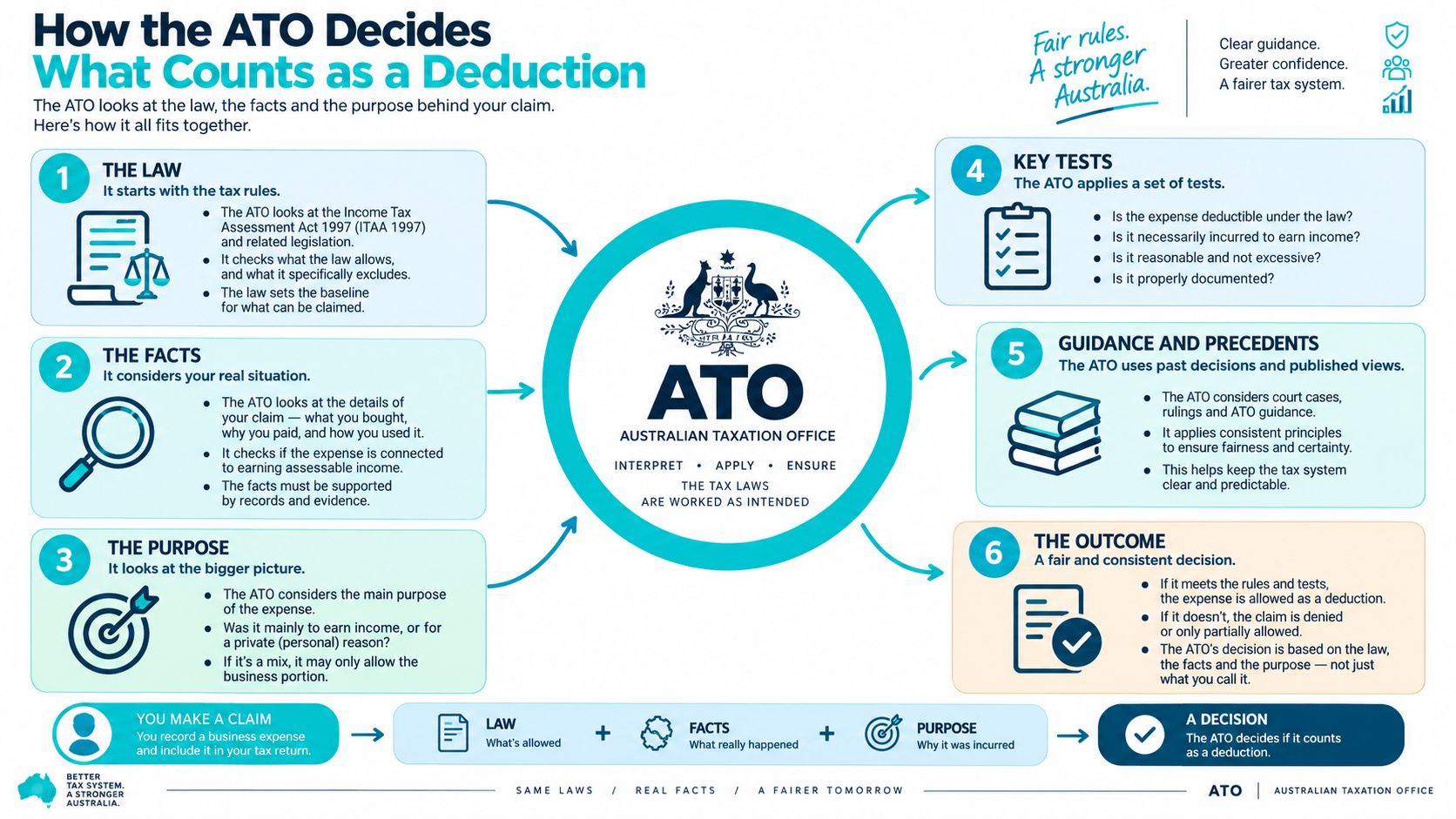
The business connection comes first
If you're paying for rent on a genuine business premises, that usually has a clear business connection. If you're paying for a home office chair, the connection exists too, but only for the portion used for work. The ATO is interested in why the expense exists, not how nicely it was described on the invoice.
A home office is the cleanest example. Power used for the work area can be deductible to the extent it relates to business use, internet can be claimed only for the work portion, and rent is never automatically deductible just because you work from home. The question is always whether the expense helps you earn income in the business, not whether it feels work-related.
Private use cuts the claim down
The ATO won't let you claim private spending as a business deduction. If an item is mixed use, only the business portion counts. That's why a family car, a shared mobile phone, or a combined internet plan needs apportionment rather than an all-or-nothing claim.
A mixed-use expense is not a failed deduction, it's a split deduction. The mistake is claiming the whole bill and hoping nobody asks.
That apportionment rule is where many owners go wrong. They see a bill, assume it's deductible, and skip the maths. The ATO doesn't work that way, and neither should you.
Records are the proof
The ATO's recordkeeping rules are blunt. You need documents that show the expense was real and that the business portion was calculated properly. If the paperwork can't support the claim, the deduction is weak even when the spending itself was legitimate.
For employees versus contractors, structure matters too, because the line between who is carrying on a business and who is merely being paid for labour affects how deductions sit. If that distinction matters in your setup, the contractor versus employee guide is worth reviewing before you lodge.
The mental checklist is straightforward. Business purpose, no private overlap, records in hand. If an expense passes those three tests, it's worth claiming. If it doesn't, don't dress it up and hope for the best.
Common Deductible Expenses Explained
The fastest way to sort deductions is by decision rule, not by memorising a giant shopping list. Some costs are usually straightforward operating expenses. Others need apportionment. A few sit in capital territory and are handled through depreciation or concession rules instead of being claimed all at once.
The guide on deductible expenses for autónomos is a good example of how messy expense lists can become when they're not organised around tax logic. Australian owners need the opposite, a clean way to decide what belongs where.
Operating costs
Stationery, software subscriptions, wages, and professional fees generally fall into everyday business costs because they're part of running the business. These are usually claimed in the year incurred if they're business-related. The catch is still evidence, not the label on the bill.
Vehicle and travel
Fuel, registration, repairs, and other car costs can be deductible to the business-use extent. Travel for work can also be deductible when it's connected to earning income. The family car trap is obvious, though, private use has to be carved out, and the method you use has to be defensible.
Home office and utilities
Internet, phone, power, and similar running costs often need apportionment, because very few owners use them purely for business. A dedicated workspace makes the claim easier to support, but the ATO still wants a reasonable split. Don't guess, measure.
Marketing and advertising
Website costs, paid ads, branding, and promotional activity are usually deductible because they're aimed at generating business income. The issue here is timing and documentation, especially if a bundle includes design, hosting, and setup. Break out what you can and keep the invoices.
Insurance, finance, education
Business insurance and bank charges are often straightforward. Interest and other finance costs can be deductible when they relate to business borrowing. Courses and professional development can be claimed when they maintain or improve the skills used in the business, but not when they put you on a new career path unrelated to current operations.
| Expense Category | Typically Claimable | Watch For |
|---|---|---|
| Operating costs | Usually in full if business-related | Mixed personal use, missing receipts |
| Vehicle and travel | Business-use portion | Logbook support, private trips |
| Home office and utilities | Business-use portion | Apportionment method, duplicate claims |
| Marketing and advertising | Usually in full | Bundled services, proof of payment |
| Insurance and finance costs | Usually in full if business-related | Loan purpose, policy scope |
| Education and professional development | Only if linked to current business activity | Courses that are too broad or private |
The rule is simple. If the expense is ordinary business overhead, claim it cleanly. If it's mixed use, split it. If it's an asset, treat it as such and don't force it into the wrong bucket.
Small Business Concessions That Supercharge Your Claims
Ordinary deductions are only the starting point. The advantage comes from the concessions that change when the tax benefit lands, and how quickly you feel it in cash flow.
Instant relief versus delayed claims
The instant asset write-off has been part of the Australian small business sector since 2015, and it remains one of the most useful concessions for businesses that buy equipment. For the 2024–25 income year, eligible businesses could immediately deduct assets costing up to $20,000 per asset under the government's extension for that period, and the concession was later extended again for 2025–26. That matters because an immediate deduction improves cash flow, while ordinary depreciation spreads the benefit over time. The offset rules sit alongside the broader ATO treatment of business expenses and capital items, so the concession still has to fit the underlying tax rules.
Timing decides the result. If the asset is first used or installed ready for use in the eligible window and your business meets the turnover rules, the deduction can arrive much faster than normal depreciation. If the asset costs $20,000 or more, it generally goes into the pool instead of being written off immediately, so the purchase needs to be planned before the year-end scramble.
Offset and pooling work differently
The small business income tax offset reduces tax payable dollar-for-dollar rather than lowering taxable income. It can reduce tax payable by up to $1,000 per year, and from the 2024–25 income year the rate moved to 16% while the cap stayed the same. The ATO says it applies to individuals with aggregated turnover below $5 million, so sole traders, partners, and individuals receiving small business income can all benefit if they qualify. The offset can sit beside deductions in the same year, which is why owners should check both, not just one.
Simplified depreciation pooling is another useful concession because it can speed up how eligible business assets are recognised for tax. It does not replace the deduction test. It changes the timing under small business entity rules, which can be a real difference when you are deciding whether to buy now or wait.
Bottom line: deductions lower taxable income, offsets lower tax payable, and asset concessions can bring the benefit forward. Use all three properly, not interchangeably.
Think beyond the return
The smartest owners do not treat tax savings as a windfall. They put them into debt reduction, equipment upgrades, superannuation, or investment capital. That is the Wealth Collective mindset, use tax settings to improve the business now and the balance sheet later. Once the concession rules are clear, advice becomes valuable because it helps you direct the savings into the right place instead of letting them disappear into day-to-day spending.
Worked Examples for Sole Traders, Partnerships and Companies
The same expense can land differently depending on structure. That's why owners who copy someone else's tax approach usually get disappointed.
A sole trader with a home office
A freelance designer works from a spare room, buys a laptop for business use, and completes a professional development course to sharpen her design skills. The laptop is treated as a business asset, so the deduction depends on the asset rules and whether the instant asset write-off is available in the year of purchase. The home office costs and course expenses are claimed to the business-use extent, not as a blanket total.
If the internet bill is shared with the household, she should split it on a fair basis. If the course is directly tied to her current design work, it's easier to justify than a broad course that changes her field entirely. The claim is not about optimism, it's about matching the evidence to the use.
A partnership buying equipment and running a vehicle
Two hospitality partners buy kitchen equipment for the business and also use a delivery vehicle that's sometimes driven for personal errands. The equipment claim follows the asset rules, while the vehicle costs need a business-use split. Each partner then picks up their share of the partnership result according to the partnership agreement and tax reporting.
The trap is thinking the business owns the problem and the partners only worry about profit distribution. They don't. The expense has to be substantiated at the entity level first, then allocated correctly.
A small company deciding what to do with profit
A small Pty Ltd director has a different problem. The company can claim business costs in the normal way, but the owner also has to decide whether to leave profit in the company, pay wages, or distribute value another way. That decision affects cash flow, tax timing, and the owner's personal position, which is why structure planning matters before profit builds up.
If you're thinking about moving from a sole trader setup to a company, the sole trader to company transition guide is the right next read before you make the leap. The main point is that the entity type changes how the income is taxed and how the deductions land, so the structure decision should happen before the tax year closes, not after.
One more thing. The small business income tax offset belongs to individuals, so it doesn't work the same way in every company scenario. That's exactly why a structure review matters before owners start shifting income around.
Recordkeeping Rules and Common Pitfalls
The ATO does not accept a confident claim without evidence. Contemporaneous records are records made at or near the time of the expense, not a neat reconstruction months later when the tax return is due. Photos of receipts, mileage logs, calendar notes, bank-feed captures, and saved invoices all matter because they show what happened when it happened.
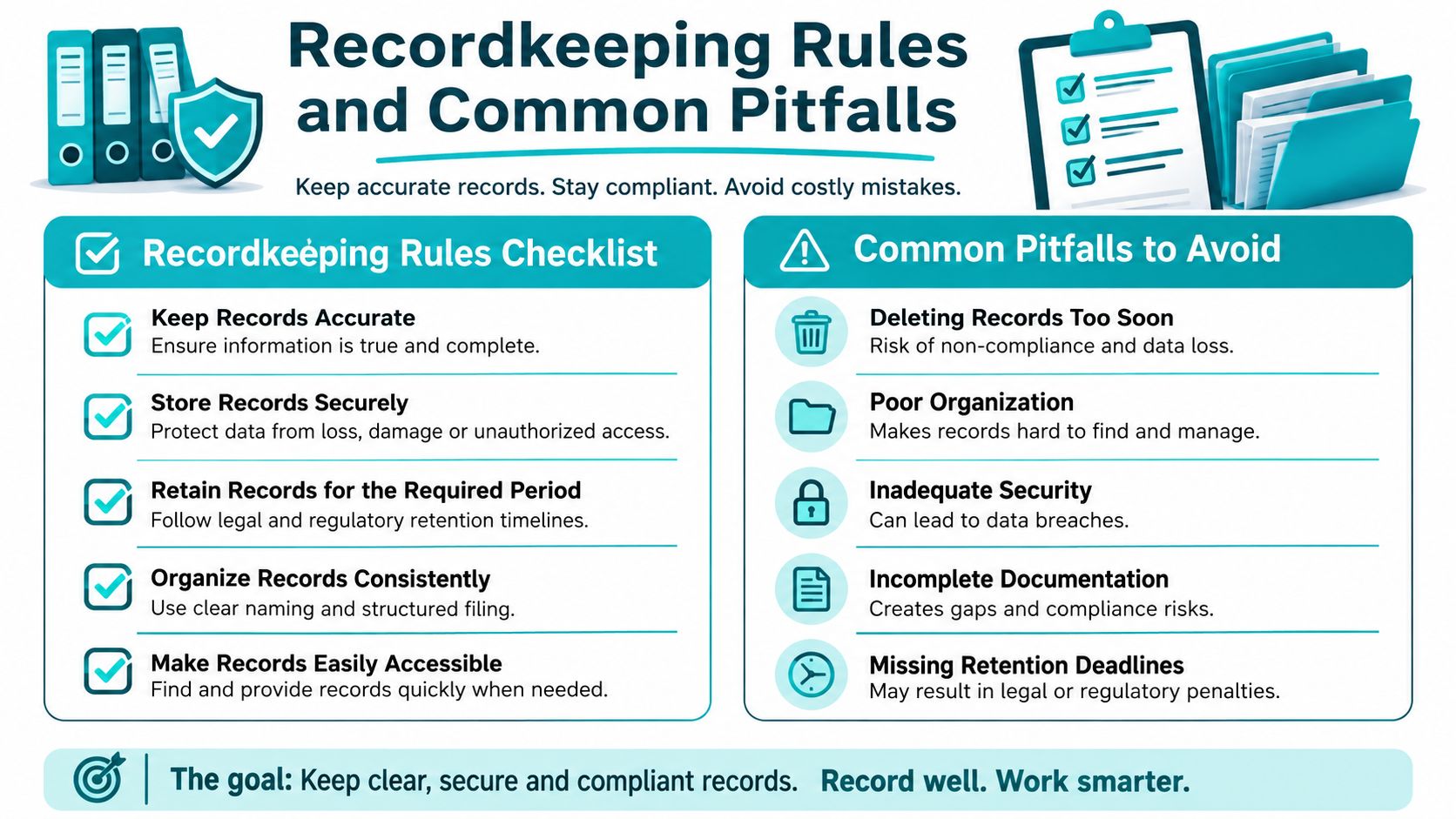
The mistakes that cause trouble
A mixed-use phone bill is a common place where claims go wrong, especially when someone writes off 100% without splitting private use from business use. The same thing happens with the family car, where owners skip the logbook method and then try to defend a rough estimate later. An invoice by itself still does not prove the expense was deductible, because the ATO checks the business connection and the records behind the claim.
Home office claims cause the same mess. Owners often assume that working from the kitchen table makes the whole utility bill deductible. It does not. If the claim is mixed, the business portion has to be supported with a method that makes sense and records that match it.
What to fix before lodgement
Do a short pre-lodgement check instead of hoping the file is fine.
- Check the business purpose: if you cannot explain how the expense helped earn income, do not claim it.
- Check private overlap: if there is family, personal, or lifestyle use, split the claim.
- Check the proof: receipts, invoices, bank records, and notes should line up.
- Check the method: if you are using a logbook, mileage record, or apportionment formula, keep it consistent.
- Check timing: if the asset was bought near year-end, confirm when it was first used or installed ready for use.
If the paper trail is thin, the claim is weak. Fix the records before you lodge, not after the ATO asks questions. If you are unsure whether your current recordkeeping setup will hold up under ATO scrutiny, the guide on how to find a good accountant can help you judge what support you need.
The best defence is boring. Keep the evidence, use a method you can explain, and stop treating deduction claims like a memory test.
Turning Deductions Into a Bigger Wealth Plan
The point of claiming properly isn't to win a bigger refund. It's to keep more of what you earn working inside the business or your household balance sheet. Every dollar of unnecessary tax paid is a dollar that can't go to debt reduction, superannuation top-ups, or investment growth.
That's where deductions fit into a broader advice process. Wealth Collective's Protection Plus, Guided Growth, and Retirement Roadmap framework is built around making money decisions fit together, not sit in separate silos. A clean tax position is useful, but a clean tax position plus a clear plan is what changes outcomes.
If your structure is messy, your records are patchy, or you're not sure which concessions you're missing, get it checked before the year closes. A short review can stop a small mistake from becoming a permanent habit.
Wealth Collective helps Australian business owners clean up deductions, test structure, and turn tax savings into a real plan for debt, super, and long-term wealth. If you want a straight answer on what you can claim and what you should fix before lodging, book a free 10-minute introductory call with the Perth and Dunsborough team through Wealth Collective.