Business hours
Monday to Friday (8.30AM - 5PM)
Weekend (Closed)


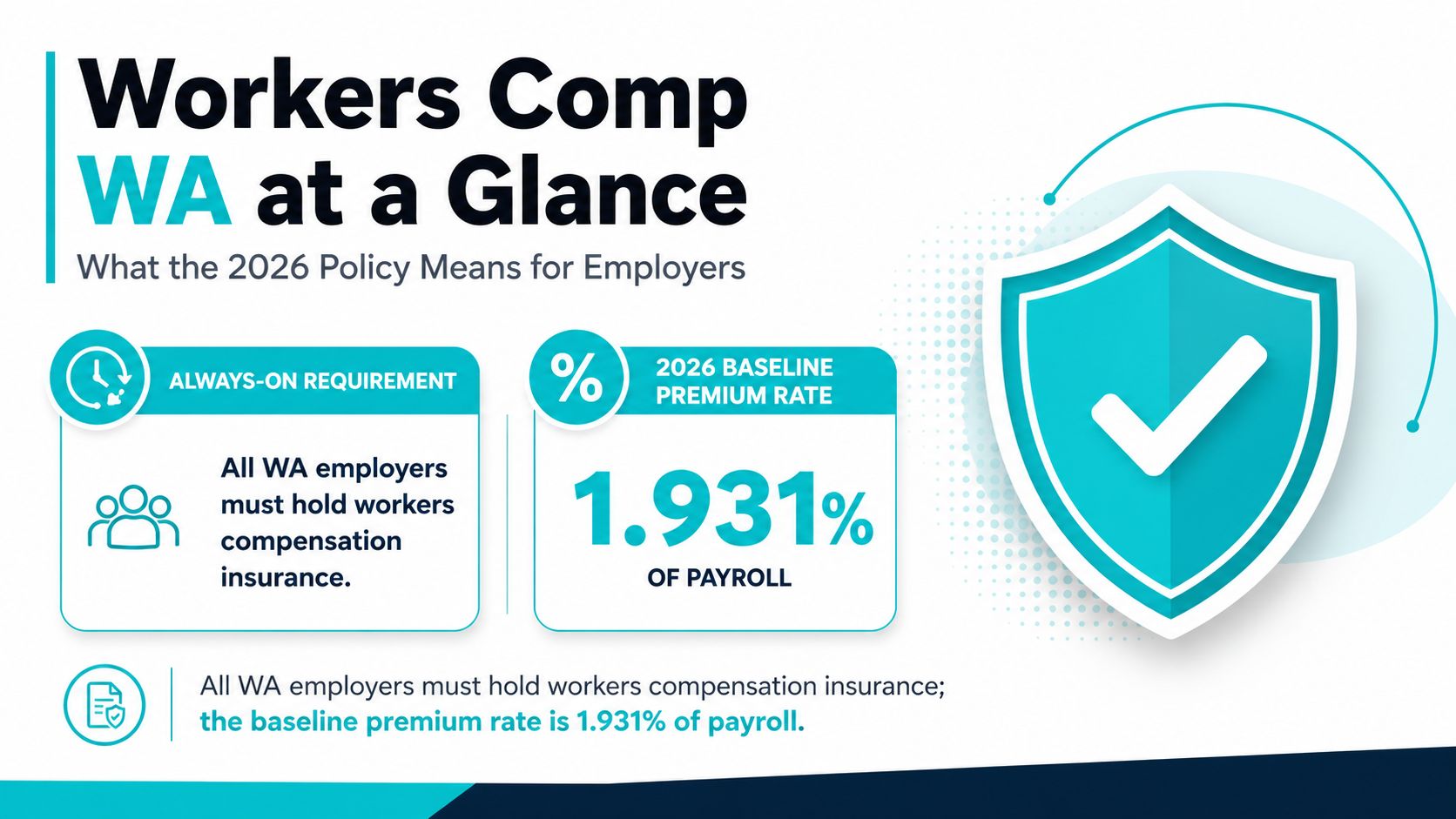
For 2026/27, the average recommended workers compensation premium rate in WA is 1.931% of wages, up from 1.823% the year before. Every WA employer with at least one worker must hold a current policy at all times.
If you're running a Perth café, trade business, professional practice or family company, that rate isn't just an insurance headline. It affects your payroll budget, renewal discussions, cash reserves and the assets you're trying to protect. Workers compensation insurance WA is a statutory obligation, but the way you manage it should sit inside a broader business and personal wealth plan.
What Workers Compensation Insurance in WA Means in 2026
A WA employer cannot let workers compensation cover lapse because cash flow is tight or staffing levels have changed. WorkCover WA requires employers to hold a current policy at all times. The average recommended premium rate also rose to 1.931% of wages for 2026/27, compared with 1.823% in 2025/26, as set out in WorkCover WA's 2026/27 premium assessment.
For a small business, budget for the policy as a recurring payroll cost, then review the estimate before renewal. Understating remuneration can create a correction later, while ignoring the rate change can squeeze cash reserves.
The operating model is straightforward:
- You employ people who meet the legal definition of a worker.
- You arrange cover through a licensed insurer.
- You declare estimated remuneration and pay a premium based on wages, industry and risk.
- If a worker suffers a compensable injury or disease, the insurer funds statutory benefits and covers the employer for eligible claim costs and expenses.
This cover sits within WA's statutory workers compensation system. It is not a discretionary policy chosen in the same way as public liability limits. The system is administered through the state's regulatory framework and supported by licensed private insurers.
The scheme is no-fault. Statutory compensation can apply even where nobody intended the injury and the employer did not cause it. Prevention still matters, but a claim should be managed on its facts rather than treated as a dispute over blame.
Practical rule: Make the renewal date a business deadline. Missing it can expose cash flow and assets when the business is already dealing with an injury.
If staff work alone or away from a central site, review check-ins and incident escalation as part of the same risk plan. A WA lone worker compliance app can organise those processes, but it does not replace insurance, risk assessment or a workable return-to-work plan.
What the WA Scheme Covers and Where the Edges Are
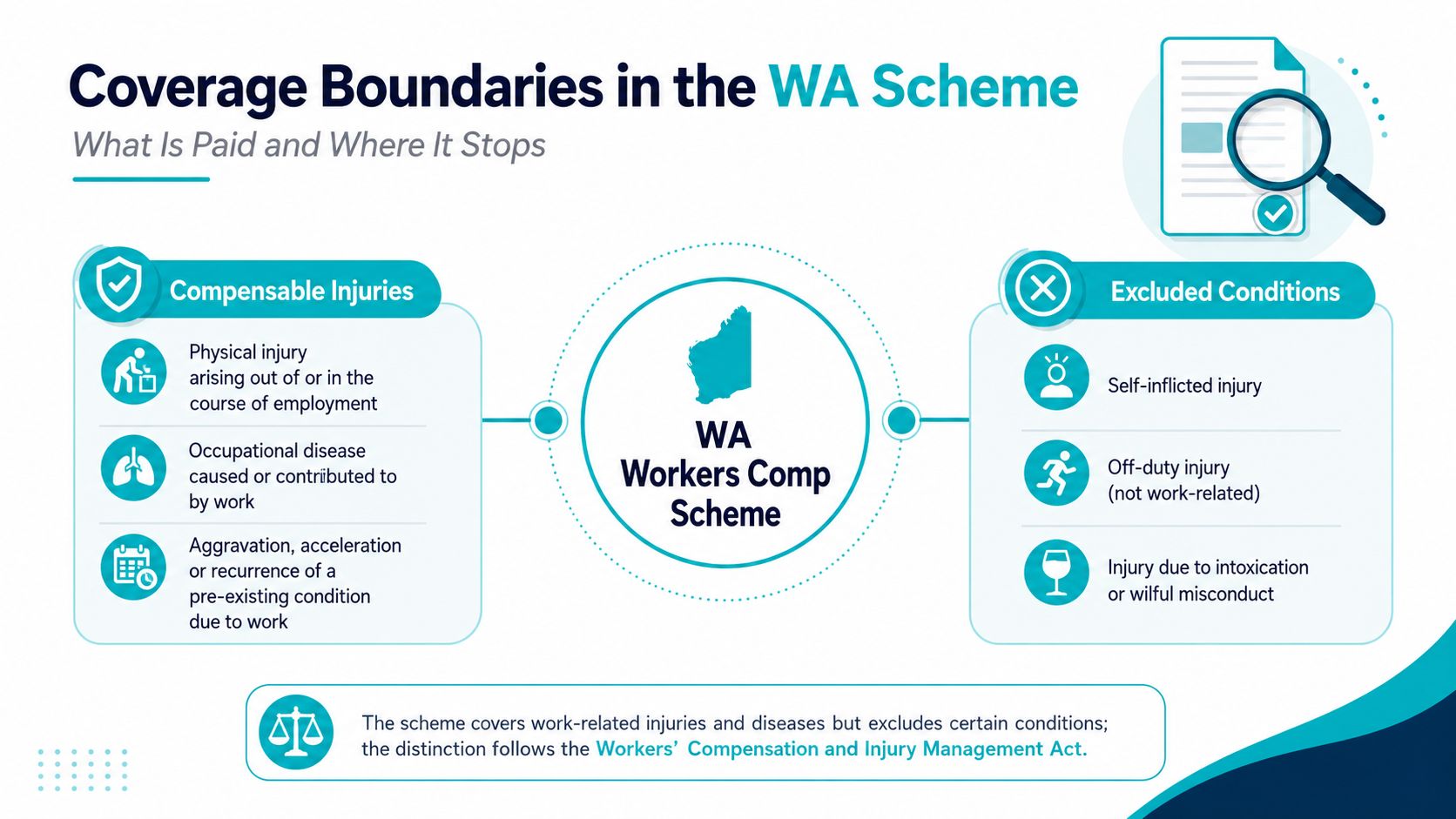
The legal question isn't just whether an injury happened during paid hours. Under the Workers' Compensation and Injury Management Act 1981, an injury generally needs to arise out of or in the course of employment. Disease coverage applies where employment contributed to the disease to a significant degree, as outlined in Safe Work Australia's comparison of WA workers compensation arrangements.
That distinction matters for gradual conditions and mental-health claims. A worker doesn't need a single dramatic accident for a claim to warrant careful assessment. The connection between the employment and the injury or disease is central.
What statutory benefits can include
Depending on the accepted claim and the worker's circumstances, the scheme can provide:
- Income compensation: Payments may support a worker who can't perform their usual duties.
- Medical and allied health treatment: Reasonable treatment and rehabilitation expenses can form part of the claim.
- Return-to-work support: The employer, worker, treating practitioners and insurer may need to coordinate suitable duties.
- Permanent impairment benefits: A qualifying permanent impairment may lead to a lump-sum payment.
- Death benefits: Eligible dependants may receive statutory support after a compensable fatal injury or disease.
WorkCover WA lifted the maximum income compensation amount to $273,220 for 2025/26, and the 1981 Act remains the core framework defining compensable injury and disease. (WorkCover WA statistical report)
What it doesn't replace
Workers compensation isn't the same as income protection. Workers compensation responds to an accepted work-related injury or disease. Income protection is personal cover that may respond to an inability to work from a broader range of medical conditions, subject to its own policy terms.
It also isn't public liability insurance. Public liability generally addresses claims by third parties, such as customers or members of the public. Workers compensation addresses statutory obligations to covered workers. A café needs to think about both, because a staff injury and a customer injury create different insurance problems.
The sensible approach is to map the policies rather than assume one policy fills every gap. Workers compensation protects the employer against statutory claim costs, while personal insurance, superannuation benefits and business overheads cover may protect the owner and the wider financial plan.
Who Must Be Covered and Which Employers Are Exempt
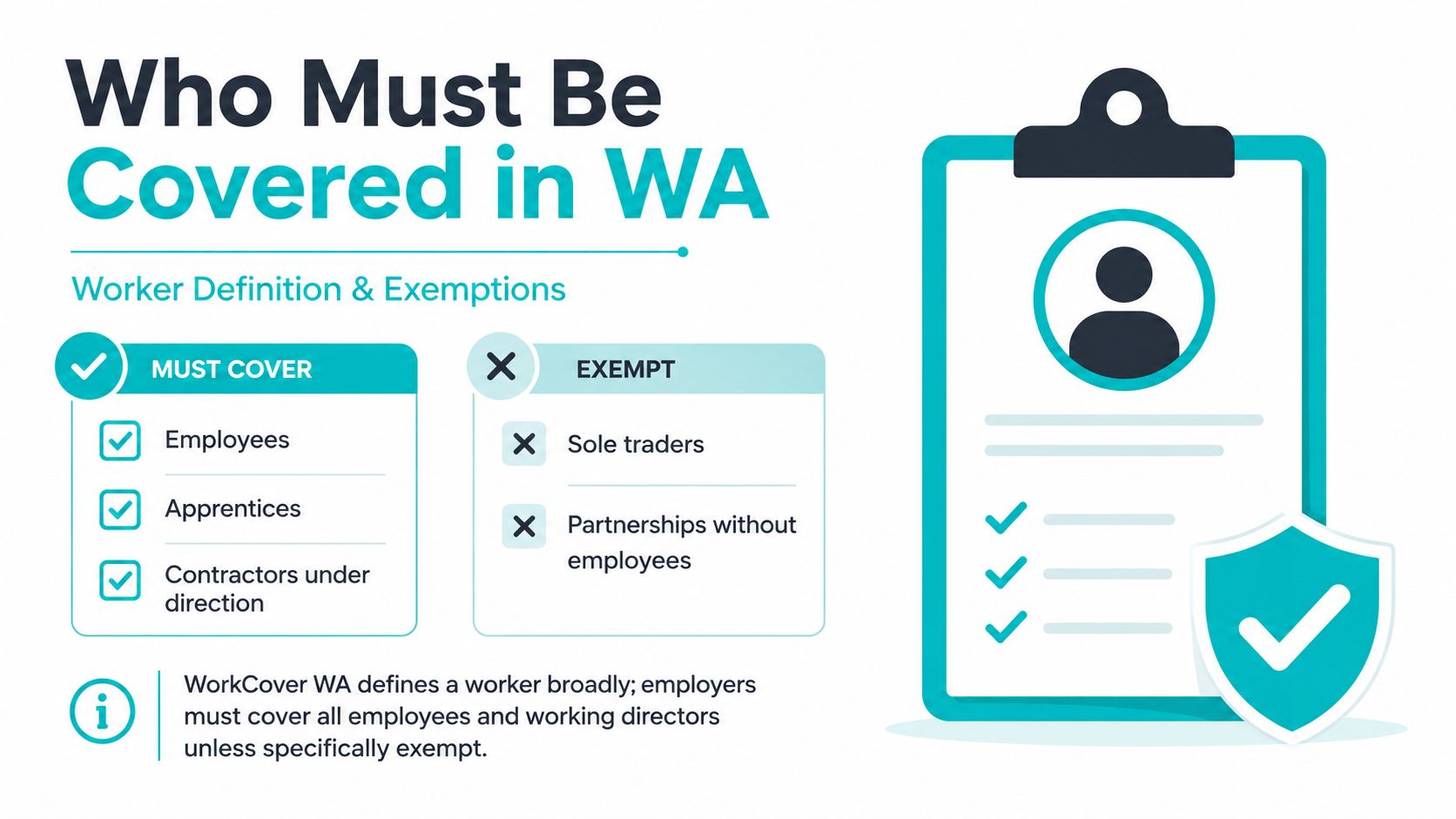
Start with the person doing the work, not the label on their payslip or invoice. WorkCover WA says the definition of worker can include full-time, part-time, casual, seasonal, commission-based and piece workers. Each worker only needs workers compensation cover in one state or territory, which matters when a business operates across borders. (WorkCover WA guidance on covering workers)
A casual employee doesn't become optional because their shifts vary. A seasonal worker doesn't become optional because they only work during a busy period. Family members on payroll also need proper consideration. The test is the employment relationship and the legislation, not whether the arrangement feels informal.
The contractor trap
An ABN doesn't automatically make someone an independent contractor for workers compensation purposes. If the business directs the person's work, controls how the work is performed and relies on that person in a way that resembles employment, the arrangement deserves a proper review.
A contractor classification error can create an unpleasant combination of problems: a disputed claim, questions about unpaid premiums, a payroll audit and a sudden need to fund costs the owner thought another party had covered. Review the substance of the arrangement before renewal, not after an injury.
For businesses with operations outside WA, a Benely workers comp state breakdown can be a useful starting point for identifying jurisdictional questions. It isn't a substitute for checking the relevant regulator or insurer, particularly where workers move between states.
A Dunsborough café example
Take a Dunsborough café with permanent staff, casual weekend workers and a regular subcontractor handling maintenance. The permanent and casual staff should be checked against the WA worker definition and included in the policy where required. The maintenance subcontractor shouldn't be excluded merely because invoices arrive instead of payslips.
The owner should record who engages each person, who directs the work, where the work occurs and whether another state could be responsible for the worker's cover. A simple workforce schedule gives the bookkeeper and insurer something concrete to review.
Use that schedule alongside the WA small business insurance requirements guide before hiring, restructuring payroll or renewing the policy. Sole traders and some partnerships without employees may fall within exemptions, but an exemption for the owner doesn't remove the obligation to cover workers who are engaged later.
How Premiums Are Calculated and What the 2026/27 Rate Change Means
Premiums should be treated as a payroll commitment, not a fixed subscription. The starting point is declared remuneration, then the insurer applies the business's industry classification and the risk associated with its work. Claims history can affect pricing, especially for larger employers subject to experience-based adjustments. Smaller businesses may instead be priced through a flat-rate approach.
At application and renewal, the employer must estimate remuneration and later reconcile that estimate with actual remuneration for the policy period under WA's legal framework. (Workers' Compensation and Injury Management Act 2023) Understate wages and the reconciliation may produce a back-premium adjustment or a dispute about the declaration. Overstate them and cash remains tied up until the adjustment is completed.
What changes at renewal
The published average recommended rate is a benchmark, not your quotation. Your classification code, wages, claims profile and policy details determine the premium that applies to your business. The 1.45% figure for 2023/24 and the scale of the WA scheme, which covered about 112,000 policies and 1.4 million workers, appear in an actuarial overview. (Actuaries Institute resource on WA workers compensation)
Before renewal, ask the insurer or broker to confirm every classification code. A business that has added warehouse work, delivery activity, a new trade or remote staff may no longer fit its previous description. Keep a written explanation of the work performed, payroll by role and any changes in operations. That record gives you a basis to challenge an unsuitable classification instead of accepting the renewal figure without review.
Set aside a 12-month premium reserve using the renewal estimate, then review it quarterly against actual wages. Keep a separate provision for a possible reconciliation and for claims-history adjustments where your business is exposed to them. Payroll growth, overtime, bonuses and new workers can all push the final amount above the original estimate.
Cash-flow check: Review wages, classification and claims information each quarter, not only when the renewal notice arrives.
Contractor arrangements deserve the same scrutiny as payroll. Compare the substance of each arrangement with your records, including who controls the work and how the person is engaged. The contractor versus employee guide for Australian businesses can support that review. For broader remuneration budgeting, use a comp ratio for compensation planning, then keep workers compensation funding as a separate cash-flow line.
Premium planning protects more than compliance. A realistic reserve leaves room for longer-running claims, including psychological injuries, without forcing the business to sell assets or delay ordinary expenses.
Lodging and Managing a Workers Compensation Claim in WA
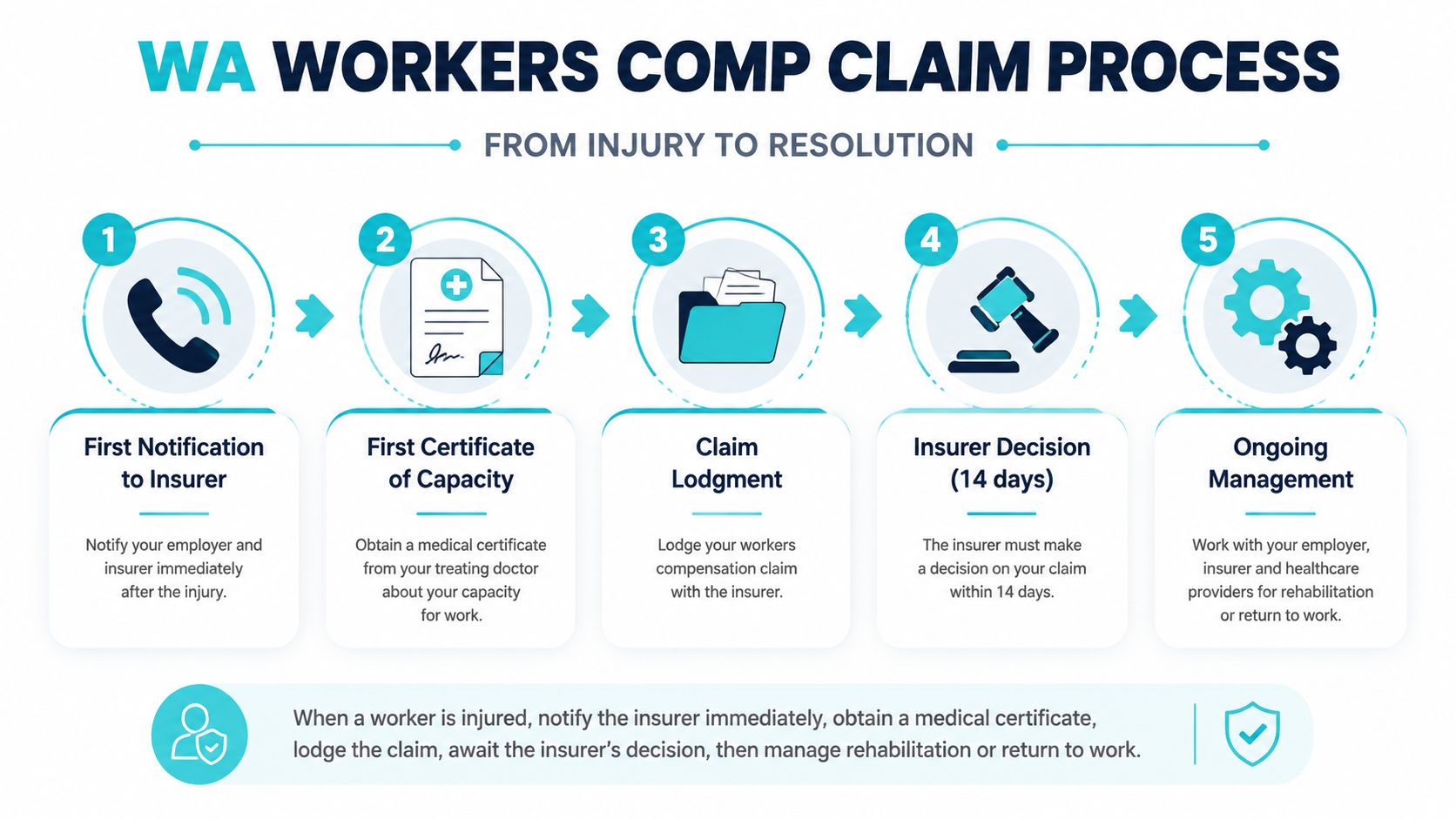
A claim can strain cash flow before the facts are settled. Set the process up before an injury occurs, with clear steps for medical care, incident records and prompt insurer notification. Keep the worker informed, preserve documents and keep the first conversation focused on care and facts rather than blame.
WA's no-fault system means the employer remains liable for statutory compensation even when no party intended the injury. The insurance policy then indemnifies the employer for covered claim costs and expenses under its terms.
The first day and first week
Give managers a written incident procedure with these instructions:
- Stabilise the situation: Arrange appropriate medical attention and make the workplace safe.
- Record the facts: Note the time, location, task, witnesses and immediate response without speculating about blame.
- Notify the insurer: Send the initial notification details as soon as practicable.
- Obtain capacity information: Request the First Certificate of Capacity and record restrictions or recommended duties.
- Keep contact appropriate: Communicate respectfully and protect the worker from pressure or retaliation.
Medical documentation sets out capacity, treatment and suitable duties. The employer should provide accurate job information and support a safe return to work. Do not diagnose the condition or pressure the treating practitioner.
Longer-running claims, including psychological injuries, need disciplined records and regular communication. Treat mental-health concerns as genuine claim-management issues, not as reasons to delay reporting or challenge the worker informally.
The pay-day obligation
Once a claim is accepted and the worker cannot work, WorkCover WA says the employer must pay weekly compensation on the normal pay day and in the normal pay manner. Penalties can apply if those payments are missed.
Plan for the timing. Before acceptance, the worker generally pays expenses, although reasonable costs may be reimbursed if the claim is accepted. After acceptance, the employer may carry payroll-style payment duties while the claim continues. Keep a separate claim file, diarise deadlines and allow for these payments in the cash-flow forecast.
Disputes can continue after acceptance. WorkCover WA recorded 2,123 disputes in 2024/25, following 2,595 in 2023/24, according to its annual report. Escalate early when capacity, liability or return-to-work arrangements become contested, and obtain experienced advice before a disagreement affects payroll, assets or the broader wealth-protection plan.
Choosing and Working With a WA Workers Compensation Insurer
WA's private underwriting model means the insurer relationship matters. You're not only buying a policy document. You're choosing the claims administration, communication standards and return-to-work support that will shape the experience when your business is already under pressure.
Don't select an insurer on the headline premium alone. Ask questions that expose how the insurer will work with your business.
| Selection question | What a useful answer should address |
|---|---|
| How do you support return to work? | Named contacts, suitable-duty coordination and communication with treating practitioners |
| How transparent is the premium calculation? | Classification, remuneration assumptions and any experience-based adjustment |
| Can premiums be paid in instalments? | Payment timing and the effect on cash flow |
| How are disputes handled? | Escalation channels, documentation and conciliation support |
A small office with stable payroll may prioritise responsive claims administration. A trade business may need stronger rehabilitation coordination and clearer guidance on modified duties. A business with interstate workers should ask how the insurer handles jurisdictional questions before a claim occurs.
When to stay and when to review
Stay with the current insurer when service is responsive, classifications are clear and the claims team helps you resolve issues early. Review the arrangement when renewal communication is poor, wage reconciliations produce surprises, claims sit without clear ownership or your business has materially changed.
At renewal, prepare your wage estimate, workforce list, industry activities and claims history. Give the insurer enough detail to price the actual business rather than an outdated description that no longer matches the work.
Why Workers Comp Is a Wealth-Protection Lever, Not Just a Compliance Cost
A worker is injured on Monday, and by Friday you are funding wages, arranging cover and handling paperwork instead of running the business. That is why workers compensation belongs in your wealth plan. A claim can affect payroll, management time, continuity, personal drawings and the value of the business you may eventually sell.
The pressure extends beyond physical accidents. Mental-health claims are receiving greater attention in WA, and longer-tail claims can keep affecting cash flow well after the incident has left the daily workflow. WorkCover WA's reporting also shows that claim payments and disputes remain material issues for employers. Those figures do not predict your next claim, but they justify early support, practical return-to-work planning and a proper cash-flow buffer.
Insurance protects the plan. Prevention protects the business that funds the plan.
Treat workers compensation as one part of a wider risk stack. It may sit alongside public liability, business overheads cover, key-person insurance, income protection and total and permanent disability cover held personally or through superannuation. Each policy answers a different question. Review the exclusions, overlaps, waiting periods and reserve needed while a claim is assessed.
A claim should also trigger a broader review of debt, super, investments and succession. Small business financial planning brings those decisions together, so insurance supports the assets and income your business is building rather than sitting apart as a compliance cost.
Your WA Workers Comp Checklist and Common Employer Questions
Use the next 90 days to turn the policy into an organised risk-control task:
- Days 1 to 30: List every employee, casual, contractor and working family member. Check where each person performs work and how the relationship operates.
- Days 31 to 60: Reconcile estimated remuneration with payroll records, review the industry classification and confirm the renewal date.
- Days 61 to 90: Test your incident process, confirm insurer contacts, document suitable-duty options and review workers compensation alongside personal and business protection.
Common questions
Does a sole trader with no employees need cover?
An owner exemption may apply, but hiring workers changes the analysis. Check the arrangement before the first person starts work.
What if a worker is injured interstate?
Each worker only needs coverage in one state or territory, but the responsible jurisdiction depends on the work arrangement and where employment occurs. Ask the insurer before sending staff interstate.
How long will a claim take?
There isn't one universal timeframe. Medical evidence, capacity, liability and disputes can all affect resolution.
How does workers compensation interact with personal insurance and super?
Workers compensation addresses accepted work-related claims. Personal insurance and superannuation benefits may address broader incapacity or death risks, subject to their terms.
If your policy, payroll or workforce structure hasn't been reviewed recently, book an initial conversation before renewal rather than after a claim.
Wealth Collective helps small business owners connect workers compensation with cash-flow planning, personal insurance, superannuation, investments and retirement goals. Visit Wealth Collective to arrange an initial call and review whether your current protection matches the business and assets you're building.