Business hours
Monday to Friday (8.30AM - 5PM)
Weekend (Closed)


You've probably reached the point where the paperwork matters as much as the diagnosis. The pain, fatigue, or mental strain has already changed your working life, and now the key question is whether your superannuation can do the job it was meant to do. A total and permanent disability superannuation claim can be a lifeline, but only if you handle the definition, the evidence, the tax, and the timing properly.
Understanding Total and Permanent Disability Cover in Super
A lot of people only discover they have TPD cover when they stop work. They log into their super, expect to see a basic balance, and instead find an insurance benefit that could support them after a permanent disability. That discovery matters because superannuation insurance is one of the few financial buffers many Australians already have in place without ever setting it up deliberately. For a plain-language overview of how the cover sits inside super, Wealth Collective's guide to what total and permanent disability insurance is is a useful starting point.
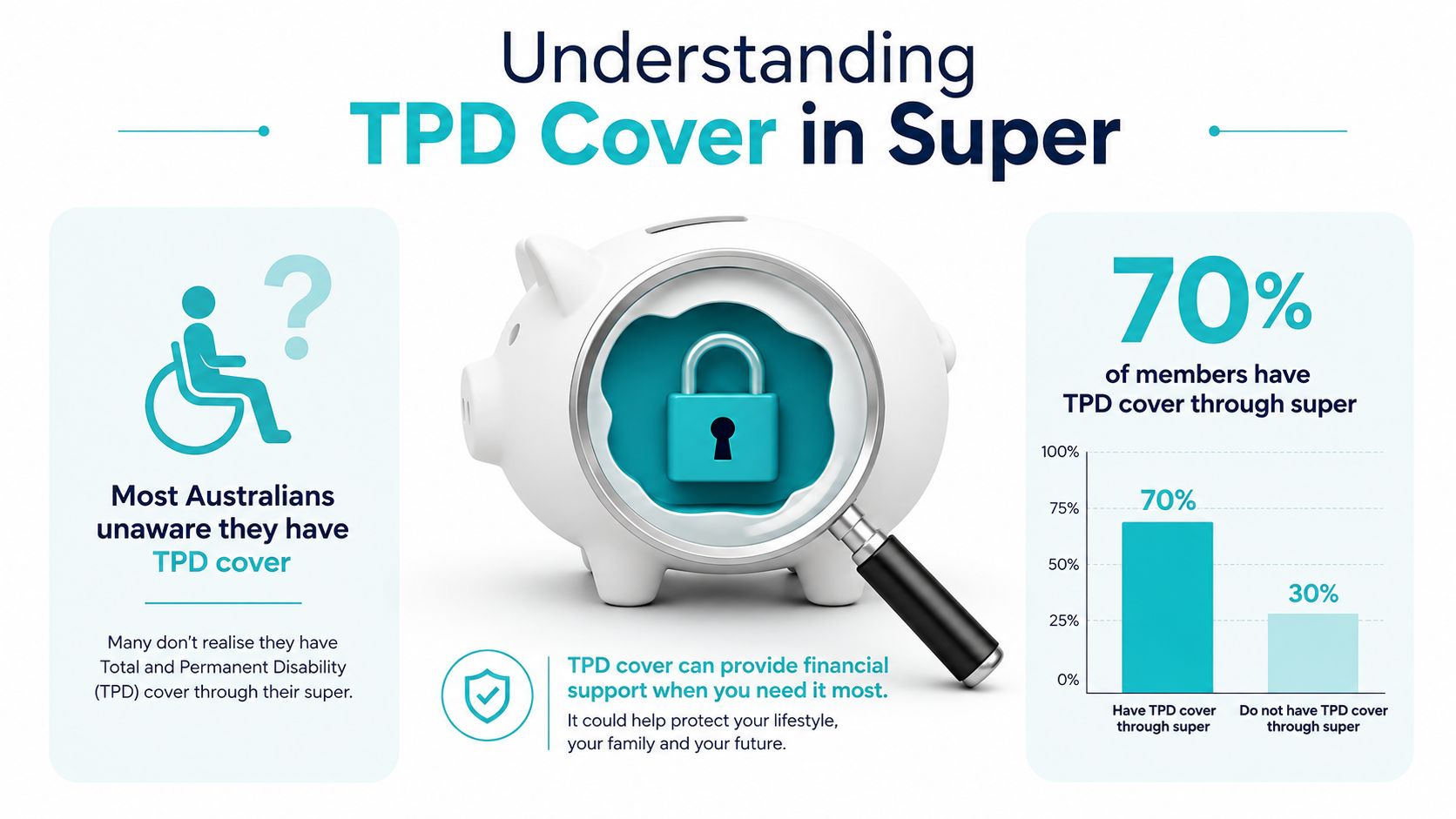
TPD cover is not the same thing as income protection or life insurance. Income protection pays while you're temporarily unable to earn, life insurance pays on death, and TPD is aimed at the point where you're unlikely to work again because of illness or injury. In Australia, that benefit often sits inside super, which means the insurer's approval is only part of the journey. The trustee still has to be satisfied that the SIS Act permanent incapacity condition of release is met before money can move out of super.
Why this matters in real life
That separation catches people out. A claim can be approved by the insurer, yet the money still isn't freely available until the super fund has completed its own checks. The policy wording also matters because it decides whether your case is judged on your own job or a broader work test.
Practical rule: don't assume a diagnosis equals a claim. TPD is about work capacity, not just the medical label attached to the condition.
For a member who can no longer do their previous job, the benefit can be substantial, but the path to payment is rarely simple. The system expects evidence, not emotion. That's why the strongest claims usually combine medical proof, employment history, and a clear explanation of why work is no longer realistic in practice.
Own Occupation Versus Any Occupation Definition Types
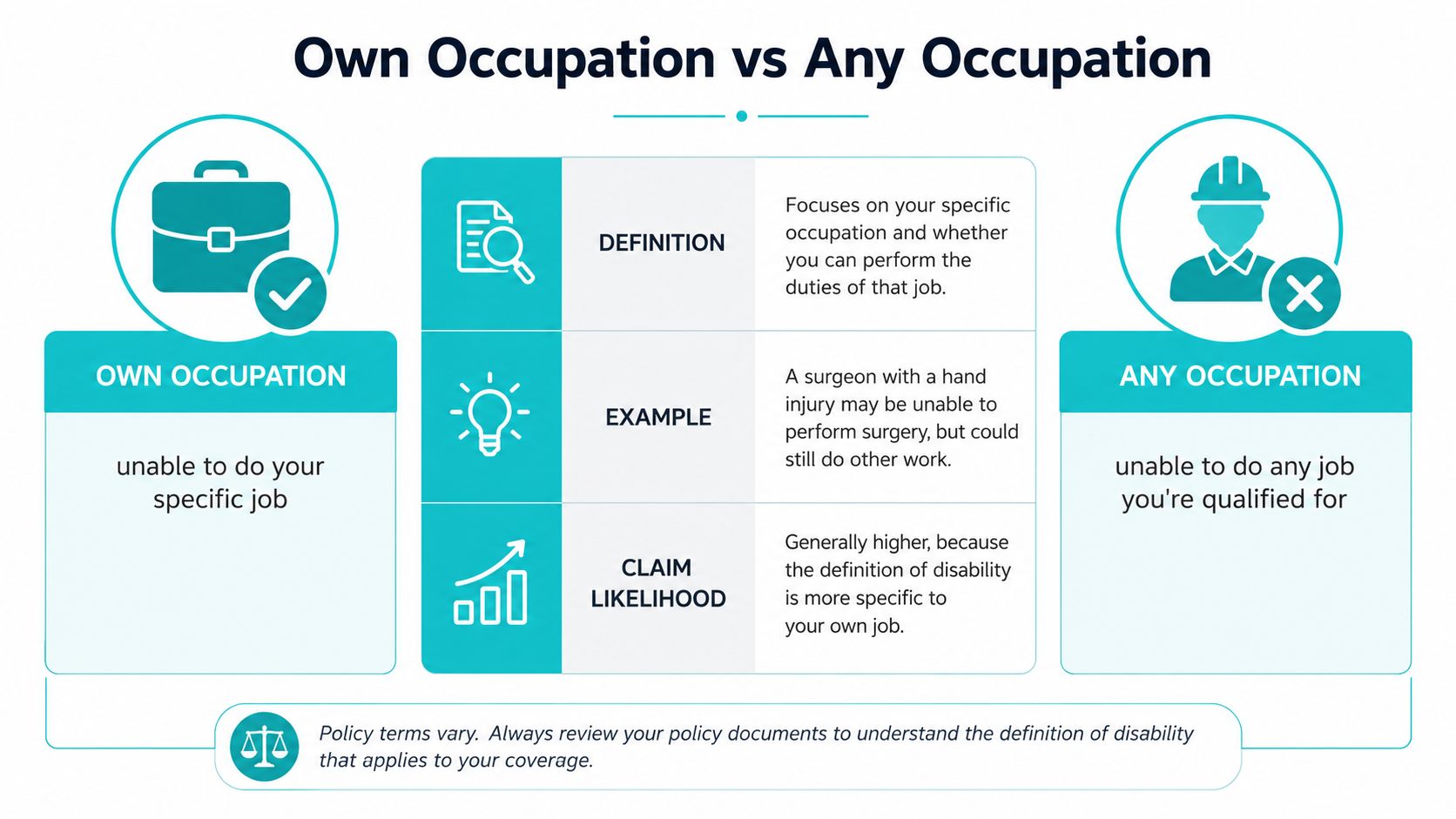
The definition inside the policy usually decides the claim outcome. If you miss that wording, you can have a real disability and still lose. The difference between own occupation and any occupation sounds minor, but it changes the standard completely.
| Definition type | What it asks | What it means in practice |
|---|---|---|
| Own occupation | Can you still do your specific job? | A surgeon who can't operate may still qualify if that job is no longer possible. |
| Any occupation | Can you do any job suited to your education, training, or experience? | The insurer may argue you could still do other work, even if it's quite different. |
Most super-based policies are built around the tougher any occupation test. That's why so many people are surprised when they discover that being unable to return to their old role isn't enough on its own. The insurer isn't asking whether your career has changed. It's asking whether you can realistically earn a living in work that fits your background.
Waiting periods and the real test
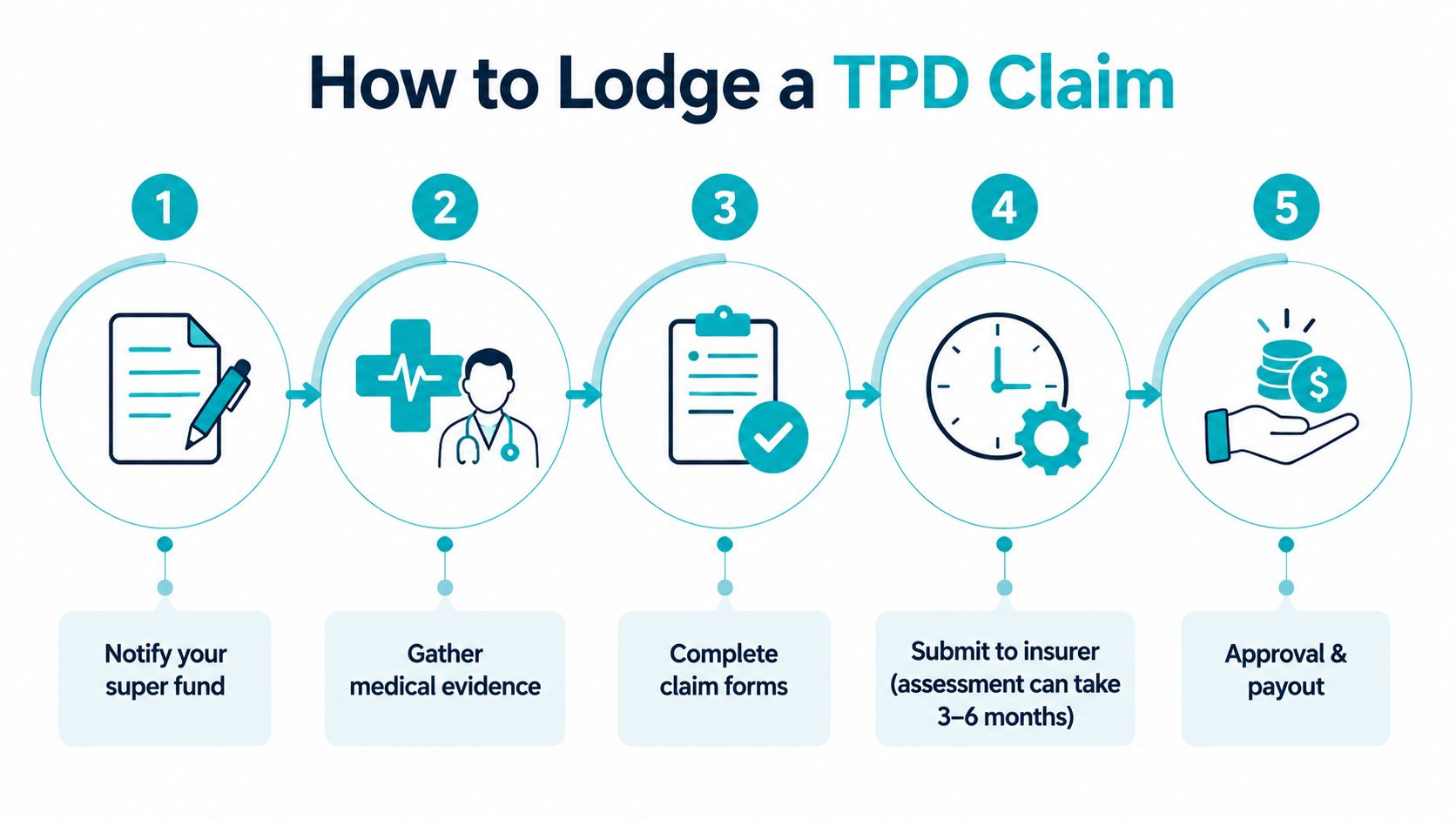
Many policies also require you to be unable to work for a continuous waiting period, commonly three or six months, before the claim can be assessed. That waiting period isn't just a box to tick. It gives the insurer time to see whether recovery or rehabilitation changes your long-term outlook.
The issue is whether you're unlikely to ever work again in the relevant sense under the policy. That's why specialist medical reports matter, but they're not enough by themselves. Vocational evidence, work history, and realistic labour-market analysis can make or break a claim, especially where the policy uses an any occupation standard.
If you're comparing policies or trying to understand why one claim looks stronger than another, focus on the wording first and the diagnosis second. The wording is the rulebook.
Eligibility Requirements and Medical Tests for TPD Claims
Start with the basics. If you don't have active TPD cover on the relevant date, the claim has a problem before it begins. That relevant date is usually when you stopped working or became permanently unable to work, so the timing of work cessation and cover status matters more than many people realise.
Many super funds automatically include TPD insurance, but that doesn't mean every account behaves the same way. If you've had multiple employers, multiple super accounts are common, and each account may carry separate cover. That can change both the size of the overall benefit and the number of claims you need to lodge.
What the claim file usually needs
The medical evidence burden is heavier than expected. Claim guides and fund materials commonly ask for two medical statements or reports from treating doctors, plus employer information confirming your last day worked and the duties you performed. Some funds go further and ask for a Part B medical report from a treating practitioner and a Part C specialist report from a specialist treating the condition.
Here's the point people miss, especially with mental health claims. A claim isn't decided by diagnosis alone. The insurer wants to know whether the condition has taken away your realistic capacity to work, and that means the reports need to speak to function, consistency, treatment history, and the likelihood of sustained return to work. For a broader read on the role of medical impairment and work capacity, the Mattiacci Law 2026 workers comp guide is a useful reference point for how legal claims often turn on medical stability rather than labels.
Insurers want evidence that lines up. If one report says you can't work and another says you might be able to return soon, the claim slows down fast.
The checklist that actually matters
- Confirm the cover date: Make sure the policy was active when you stopped work or became unable to continue.
- Gather treating reports: Ask for medical evidence that deals with function, not just symptoms.
- Document your job properly: Include the actual duties, not just the job title.
- Check every super account: Separate accounts can mean separate cover and separate claim paths.
- Match the wording: If the policy uses an any occupation test, the evidence has to address that standard directly.
Many claims weaken at this point. The insurer doesn't need perfection, but it does need consistency. If the file is thin, unclear, or assembled late, the claim becomes much harder to defend.
How to Lodge a TPD Claim Through Your Super Fund
Start early and keep the file tidy from the outset. If you wait until the super fund starts asking for missing pieces, delays are almost guaranteed. The strongest claims are built around one clear account of what happened, when it happened, and how the evidence matches the policy wording.
The practical checklist
Get the claim pack from your super fund and insurer first. Then gather the documents that show how your working life changed. That usually includes medical reports, employer records, job descriptions, leave records, and anything that shows the point at which you stopped work and why.
The employer side carries more weight than people expect. The fund usually wants confirmation of your last day worked and the duties tied to your role. If your job involved physical tasks, technical work, or client contact, the detail around lifting, driving, concentration, and public interaction can matter just as much as the diagnosis.
If you already hold death cover through super as part of your wider insurance setup, Wealth Collective's life insurance through super page helps separate that cover from a TPD claim. That distinction matters. Death cover and disability cover are different products, and confusing them slows people down.
How the claim gets assessed
Once you lodge the claim, the insurer and trustee run two separate tests. The insurer decides whether the policy definition is met. The trustee then decides whether the superannuation release rules are satisfied. Those are different decisions, and they do not always move at the same pace.
Super claims data reported an average finalisation time of 4.7 months in the 12 months to June 2024, with only 14% processed within two weeks and 23% taking more than six months. Slow claims are common inside superannuation, so build that into your expectations from the start.
A strong file includes both medical evidence and vocational evidence. Medical evidence proves the condition. Vocational evidence shows why ordinary commercial work is not realistic for someone with your education, training, or experience. Leave out either side, and the insurer has room to push back.
Tax Treatment and Centrelink After Claim Approval
The headline benefit is not the number you keep. A TPD benefit paid through super is usually paid into your super account first, and the trustee then handles the release step. That flow matters because the tax outcome can change the net amount in your hand.
Wealth Collective's tax on superannuation guidance is a good companion if you want the broader tax rules around super benefits. For TPD specifically, the taxable component can be partly converted to tax-free using the legislated formula based on service days and days to retirement. That formula affects the amount exposed to tax on withdrawal.
Why age changes the outcome
For a member under preservation age, the remaining taxable portion is generally taxed at the super lump-sum rate referenced in legal commentary as 22% including Medicare levy. That means the same approved claim can produce very different usable cash depending on age and the composition of the super benefit. If you're over 60, the tax outcome can look different again, which is why the structure of the payout matters as much as the approval itself.
Bottom line: the approved benefit and the cash you can spend are not the same thing.
Centrelink and multiple accounts
Centrelink treatment depends on how the money is received and how it sits in your overall financial position. Once the benefit leaves super, it becomes part of the broader means-testing picture. If you leave it sitting in super, the treatment can differ again, which is why advice before withdrawal is worth getting, not after the fact.
Multiple super accounts create another layer. If you've kept cover across employers, you may have more than one potential TPD benefit, and each account can carry its own tax and access consequences. That can be a good thing, but only if you know where every policy sits and how each one will be paid.
This is the part of the process where a simple lump-sum story becomes a planning problem. The claim is only half the job. The tax handling decides how much survives the journey.
Why TPD Claims Get Declined and How to Appeal
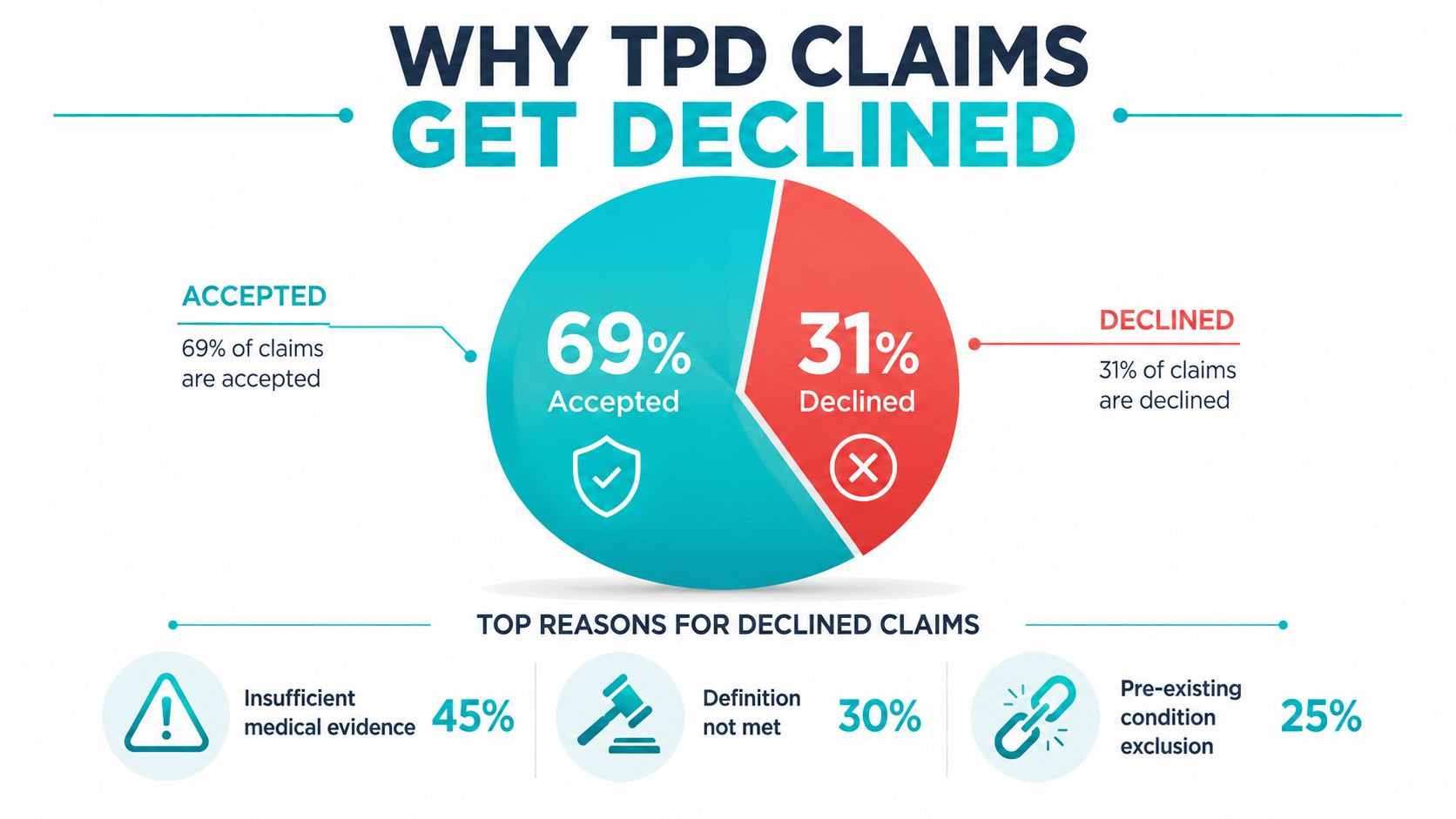
A 69% acceptance rate still leaves a large minority of claims in trouble, and the issue is often not whether the person is unwell. It's whether the evidence matches the policy wording closely enough for the insurer to say yes. In the same reporting, 6% of claims were declined and 20% remained undetermined, which tells you how often the process stalls before resolution (Rainmaker claims data).
Why claims go wrong
The common failure points are predictable. Medical evidence can be too general, the insurer can decide the policy definition isn't met, or the claim can be lodged after the cover has lapsed. Mental health claims face extra friction because the condition may be invisible, fluctuating, or tied to return-to-work uncertainty rather than a single event.
Administrative delay is also a problem in itself. If the claim sits unresolved, members can run out of patience and proof can get harder to gather. That's one reason ASIC's commentary on super safety-net failures matters. It reinforces the practical reality that disability benefits are hard to handle even before a dispute starts (ASIC commentary).
What to do if the insurer says no
The first move is internal review through the super fund or insurer. Don't accept a rejection letter at face value if the file is incomplete or the definition has been applied too narrowly. If that doesn't fix it, the next step is a formal complaint pathway and, where available, external dispute handling.
If you want a practical breakdown of the next moves after a refusal, Bell Law's page on what to do if a disability claim is denied is a useful reference. The important point is that a decline is not the end of the road. It usually means the claim file needs to be sharpened, expanded, or challenged.
A refusal letter is often an evidence problem, not a final verdict.
The best appeals are built on the same foundation as the original claim, stronger medical reports, clearer vocational evidence, and a tighter response to the exact wording the insurer relied on.
Next Steps and When to Seek Professional Financial Advice
If your situation is straightforward, you can start gathering records yourself. If it's not straightforward, get advice early. Multiple super accounts, a disputed definition, mental health evidence, or tax questions after approval are all signs that you're better off with a structured plan than a guess.
That's where Wealth Collective fits for Perth and Dunsborough clients. The firm's Protection Plus service pillar can help you sort the super and insurance side of the claim, while its broader advice process can also look at how the payout affects your cash flow, debt, and future planning. With more than 50 years of combined experience, the team works to turn a messy claim into a practical set of next steps.
The right time to act is before the file goes off the rails. If you haven't lodged yet, advice can help you line up the evidence and choose the cleanest claim path. If the claim is already underway, advice can help you pressure-test the wording, the tax outcome, and the release rules before a mistake becomes expensive.
Book an initial call, get the facts on the table, and move with a plan instead of hope.
Frequently Asked Questions About TPD Super Claims
Can I claim if I've got a pre-existing condition?
Possibly, but the policy wording matters. Some covers exclude pre-existing conditions, so the file has to show when the disabling condition arose and whether the exclusion applies.
What if I went back to work for a short time?
A short return to work doesn't automatically kill the claim. The insurer looks at whether you can work reliably and sustainably in a job suited to your background, not just whether you managed a temporary attempt.
What does it mean if my claim is still undetermined?
It means the insurer hasn't finished its assessment. That often happens when documents are missing, medical evidence is inconsistent, or the trustee still needs to complete its release check.
Can one condition qualify under one policy and fail under another?
Yes. Different wording produces different outcomes, especially where one policy uses an own occupation style test and another uses any occupation.
If you're facing a total and permanent disability superannuation claim, don't try to manage the moving parts alone. Wealth Collective can help you understand your cover, organise the claim, and assess the tax and super implications before you make a mistake that's hard to unwind. Visit Wealth Collective and book an initial call so you can move forward with clear advice and a plan that fits your situation.