Business hours
Monday to Friday (8.30AM - 5PM)
Weekend (Closed)



You're 58, it's late April, and your accountant has just reminded you that you haven't made a serious concessional contribution for several years. Your employer contributions have been modest, your income is higher than usual, and a substantial unused super balance is sitting in the background. The problem isn't discovering that unused super cap carry forward exists. It's identifying which year is about to expire, then deciding whether you can and should use it before 30 June.
That entitlement doesn't send a dramatic warning when it disappears. It expires on a rolling basis after five financial years, with the oldest available amount used first. The ATO gives a clear example: an unused amount from 2020–21 must be used by the end of 2025–26 or it's lost (ATO concessional contributions cap guidance). This guide focuses on the practical decision, not just the eligibility rule: find the next expiry, check your position, and avoid rushing into a contribution that doesn't suit your broader plan.
When Unused Super Cap Carry Forward Becomes Urgent
The professional in this example has three years of unused concessional cap available. She's still working, her income has risen, and she's considering a final contribution before retirement. On paper, the balance looks like an opportunity. In practice, the oldest year is on the chopping block at the end of the financial year.
That distinction matters. Carry-forward entitlements expire individually, not all at once. If she waits another year, she may still have newer unused amounts, but the oldest entitlement will be gone permanently. The ATO confirms that unused concessional amounts can be carried forward for up to five previous financial years and are applied on a first-in-first-out basis (ATO rules on caps, limits and tax).
Practical rule: Don't ask only, “How much carry forward do I have?” Ask, “Which financial year expires next, and what date do I need to beat?”
The silent expiry problem
This is a once-in-five-years planning window for each year's unused amount. It isn't a loophole, and it isn't free money. It's an opportunity to move eligible before-tax contributions into super during a year when the tax result and retirement objective justify doing so.
The right sequence is straightforward:
- Identify the oldest amount: Check the ATO record rather than relying on memory or an old spreadsheet.
- Confirm eligibility: Your total super balance must meet the relevant test at the prior 30 June.
- Model the contribution: Include employer contributions, salary sacrifice and any personal deductible contribution.
- Allow processing time: A contribution needs to be received by the fund before the relevant cut-off, not merely initiated.
Late April is when this becomes urgent because there may be limited time to confirm payroll figures, sell an investment, obtain advice and ensure the fund receives the contribution. Acting early gives you room to change course if the numbers don't work.
How the Carry Forward Rule Actually Works
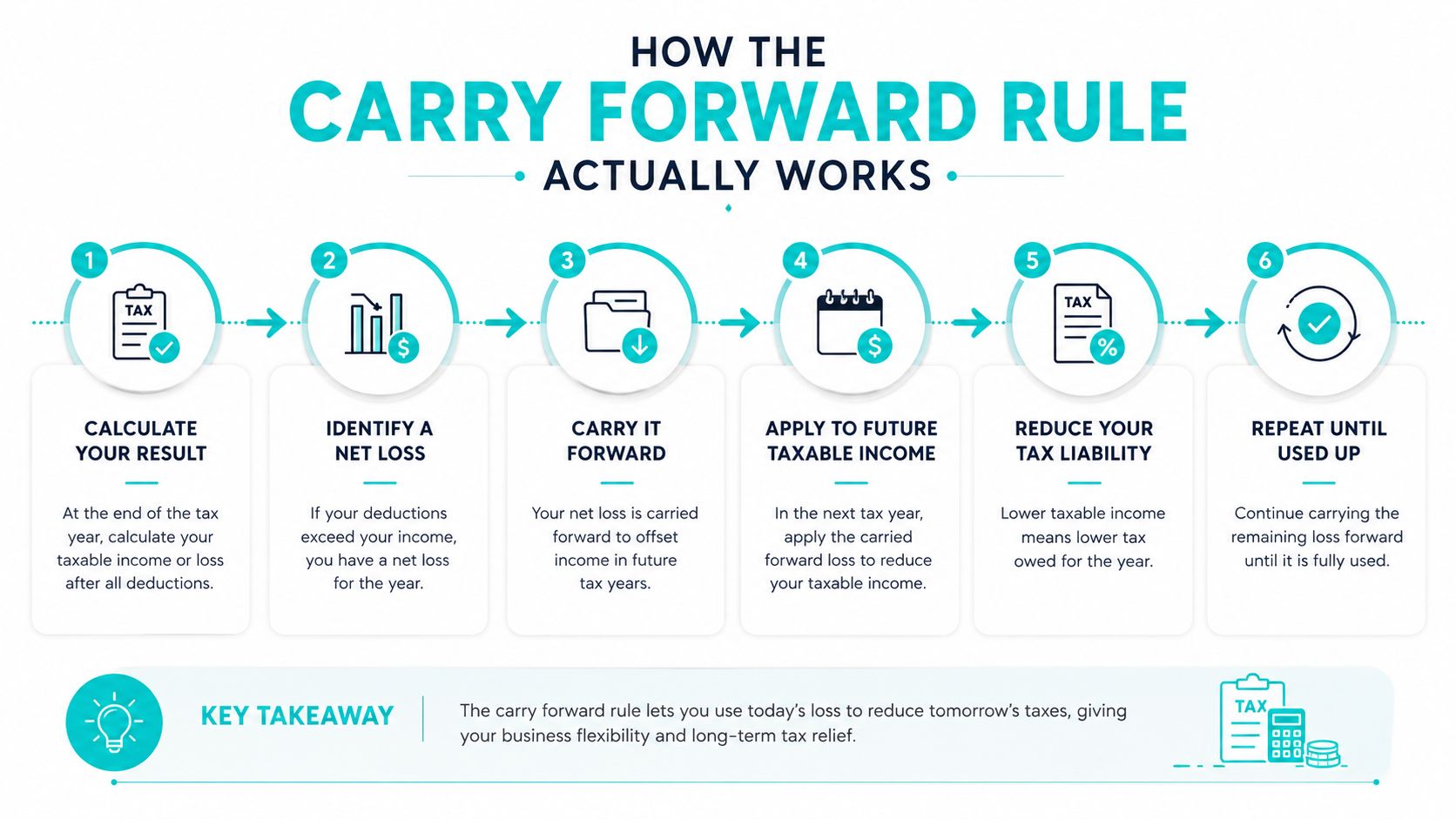
The rule is easier to use once you separate the moving parts. Since 1 July 2018, eligible Australians have been able to retain unused concessional cap amounts for up to five financial years. The first financial year in which those accumulated amounts could be used was 2019–20, and amounts older than five years expire (ATO contribution caps overview).
The main current-year concessional cap is $30,000 in 2024–25 (ATO concessional contributions cap guidance). That cap covers contributions that receive concessional tax treatment, including compulsory employer contributions, salary sacrifice and personal contributions you claim as a tax deduction.
The eligibility test is separate from the amount available. You can use carry forward only if your total super balance was below $500,000 at 30 June of the previous financial year. The ATO applies the oldest unused amounts first, so newer amounts don't protect an older entitlement from expiry.
One combined cap
Think of each year's concessional cap as a fuel tank. It refills each financial year, but old fuel becomes unusable after five years. Employer contributions and salary sacrifice draw from the same tank, so you can't count them separately and assume you have two pools of room.
For a broader explanation of how concessional limits interact with salary sacrifice, see Wealth Collective's guide to concessional contribution limits. The ATO calculates the available amount automatically when contributions are received. You don't lodge a special election or ATO form to access carry forward.
The planning responsibility still sits with you. You need to check the available balance, estimate what your employer will contribute, and choose the contribution method that fits your employment and tax circumstances.
Calculating Your Available Carry Forward Balance
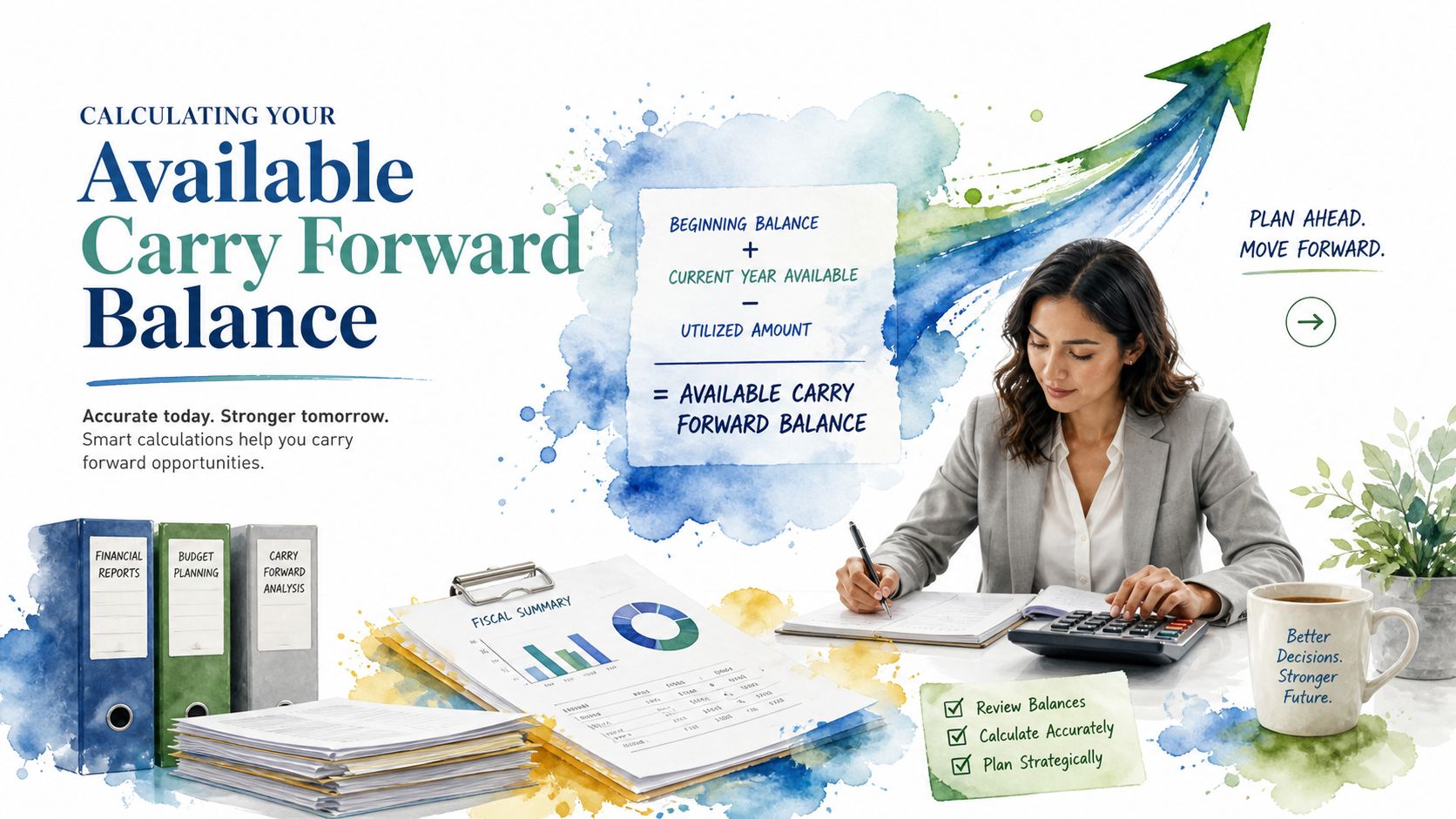
Start with each financial year separately. Take that year's concessional cap, subtract the concessional contributions received by your fund, and record the unused portion. Repeat the process across the eligible years, then arrange the amounts from oldest to newest.
The ATO does the formal calculation, so your own spreadsheet is a planning aid, not the legal record. In myGov, open the ATO service and locate the super information showing carry-forward concessional contributions. Compare that record with your fund's contribution statement, because payroll timing can mean an amount appears in a different financial year from the date you expected.
The expiry date matters more than the total. The ATO's five-year rule means an unused amount from 2019–20 expired on 30 June 2024. Once an amount expires, it can't be revived by making a later contribution.
Check the balance before committing
Use the ATO record to confirm:
- The available amount for each year, not just the combined total.
- The oldest year still open, because that's the amount most exposed to expiry.
- Contributions already received, including employer contributions and salary sacrifice.
- Your prior 30 June total super balance, which determines eligibility for the relevant year.
A salary sacrifice estimate can help you test different contribution patterns. Wealth Collective provides a salary sacrifice super calculator for this type of initial modelling, but a calculator won't replace a review of fund records, payroll timing or tax circumstances.
Don't leave the calculation until after June. Once the deadline passes, the ATO can't apply that expired amount to a later contribution.
Worked Examples for Real Planning Situations
Worked examples are useful because the headline balance rarely tells you whether a contribution is sensible. The examples below are illustrative planning scenarios, not personal tax advice. Actual outcomes depend on contribution timing, taxable income, fund treatment and the member's wider financial position.
A pre-retiree making a final top-up
A pre-retiree couple has one spouse who made little or no concessional contribution across four financial years. They estimate roughly $90,000 of unused cap accumulated from 2019–20 to 2022–23. In 2023–24, the spouse already has a $40,000 employer contribution, so a personal contribution of $50,000 would use the available carry-forward room without exceeding the ordinary $30,000 annual cap on its own (ATO concessional contributions cap guidance).
Before acting, they would check the ATO contribution statement, confirm the contribution is received before 30 June, and lodge a valid notice of intent with the fund if the personal contribution is to be claimed as a deduction. The benefit may be meaningful if the contribution is made while the spouse's assessable income is high, but the couple must compare the deduction with liquidity needs, retirement access and the fund's tax treatment.
A high-income earner using a stronger income year
A high-income earner receiving $260,000 of income has two years of unused carry-forward available. An inheritance creates the capacity to make a larger personal contribution, and the adviser models a $37,000 deductible contribution. That contribution may reduce taxable income, but the member also needs to account for Division 293 tax, which can impose an additional 15% tax on affected concessional contributions for high-income earners.
The comparison isn't “super tax versus bank tax”. Selling investments may create capital gains, the contribution may reduce accessible cash, and Division 293 can narrow the apparent advantage. The correct outcome is the after-tax result, not the size of the deduction. A super growth calculator can help illustrate the accumulation effect, but the final decision needs contribution and tax modelling together.
| Scenario | Unused Cap Available | Top-Up Contribution | Tax Saved | Net Super Benefit |
|---|---|---|---|---|
| Pre-retiree final top-up | Roughly $90,000 | $50,000 | Must be modelled | Contribution less contribution tax and opportunity cost |
| High-income earner | Two years available | $37,000 | Must be modelled after Division 293 | Contribution less tax, investment-sale costs and liquidity impact |
The table deliberately avoids presenting a universal dollar saving. A tax result can't be calculated responsibly without the person's marginal rate, deductions, contribution timing, investment cost base and Division 293 position.
Who Benefits Most and When to Use It
Carry forward suits people whose concessional contribution pattern is uneven. It's most valuable when a high-income year arrives after several quieter years, and when the member has a clear reason to place more money inside super.
| Audience | Trigger Condition | Typical Carry-Forward | Best Timing |
|---|---|---|---|
| Pre-retirees | Several low-contribution years followed by a final strong employment year | Several years of unused room may be available | Before retirement, while deductible income and employer contributions can be confirmed |
| High-income earners | Bonus, inheritance or capital gain creates an unusually high taxable-income year | Depends on prior contribution history | Before the relevant oldest amount expires, once the tax outcome is modelled |
| Small business owners | A lumpy profit year follows quieter trading years | Varies with earlier business and personal contributions | After profit is clear, before 30 June and before the business distributes or spends the cash |
The decision is about timing, not the slogan
Pre-retirees should focus on whether they can make the contribution while they still have assessable employment income. Once work stops, the deduction may have less value, and the opportunity to use an expiring amount may be gone.
High-income earners should compare the concessional contribution with keeping cash outside super. A contribution can be attractive in a high marginal-tax year, but Division 293, access restrictions and investment-sale consequences need to be included.
Small business owners need tighter cash-flow discipline. A profitable year can make a deductible contribution sensible, but the contribution shouldn't compromise tax liabilities, working capital or business resilience.
Don't use carry forward just because a balance appears in myGov. Use it when the tax deduction, retirement objective and cash-flow position point in the same direction. If the contribution would leave you short of accessible funds, a non-concessional strategy or retaining cash may be more appropriate.
Common Pitfalls That Cost Australians Money
The most expensive mistakes are usually administrative, not technical. People remember that unused cap can carry forward, then forget the conditions attached to using it.
Five errors to remove from your process
- Misreading the balance test: The $500,000 total super balance threshold applies to eligibility for carry forward, not only to after-tax contribution strategies. The relevant balance is measured at 30 June of the previous financial year (ATO concessional contributions cap guidance). If you're over the threshold, the expected tax deduction may not be available through carry forward.
- Treating the balance as permanent: Unused amounts expire after five financial years. The ATO says the oldest unused amounts are used first, so failing to act before the relevant 30 June can permanently remove that year's room.
- Ignoring additional tax: Division 293 can add tax for high-income earners. A contribution that looked attractive before modelling may deliver a smaller benefit after the additional tax is included.
- Waiting for a perfect year: A carry-forward balance isn't a savings account. If the oldest amount is close to expiry, delaying can destroy the opportunity. If your income is high now, waiting for a lower-income year can also reduce the value of the deduction.
- Overlooking payroll and notice requirements: Employer contributions, salary sacrifice and personal deductible contributions must be coordinated. Keep evidence of the fund receiving the contribution and complete the notice of intent process where required. Don't assume an arrangement made close to year-end will be processed as you intended.
A 15-minute check can expose the oldest expiry date, but it won't answer whether contributing is right for you. That requires an after-tax comparison with debt repayment, investments, cash reserves and retirement timing.
A Practical 30 60 90 Day Action Plan
Use a deadline-driven process. The aim isn't to force a contribution. It's to prevent an avoidable expiry while leaving enough time to reject a poor strategy.
Days 0 to 30
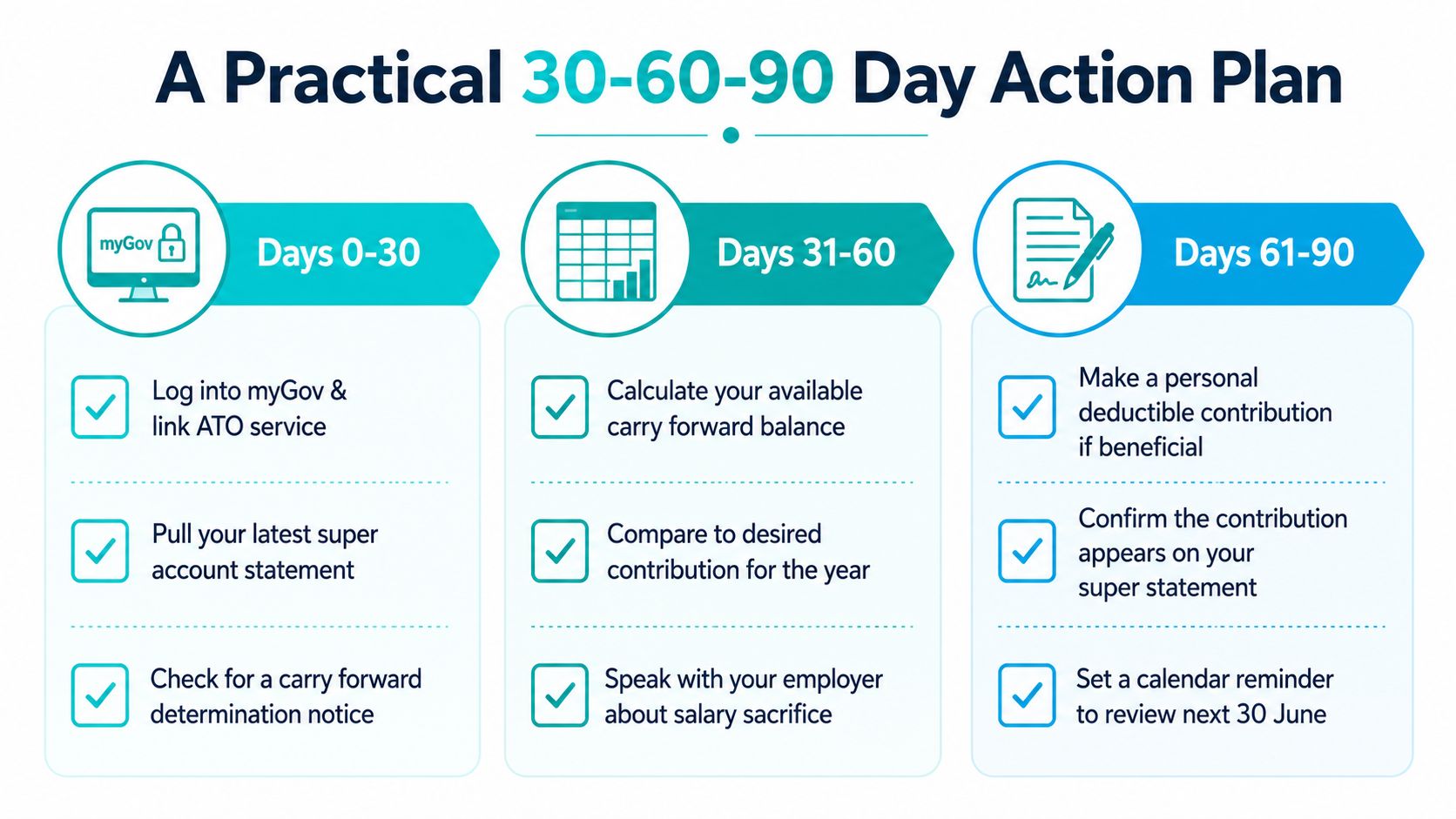
Log into myGov and open the linked ATO service. Pull your latest super account statement, review the carry-forward determination and identify the oldest unused amount. If you're reviewing the position before the 2025 financial year-end, check whether the unused amount from 2019–20 is approaching its 30 June 2025 expiry, based on the five-year rule and the relevant ATO record.
Confirm your total super balance at the prior 30 June. Don't use an old balance estimate, because investment movements and contributions can change whether you meet the eligibility test.
Days 31 to 60
Model the contribution using the current-year concessional cap plus the expiring amount, then subtract employer contributions and salary sacrifice already received or expected. Ask payroll for timing details and confirm that contributions won't be counted in an unexpected financial year.
If you're making a personal deductible contribution, confirm the fund's process for receiving the contribution and lodging the notice of intent. Don't wait until the final days of June to discover that your fund needs different documentation.
Days 61 to 90
Make the contribution early enough for the fund to receive and process it before the deadline. After receipt, check the amount on your super statement, lodge the notice of intent with the fund where appropriate, and declare the deduction in your tax return.
Set a calendar reminder for the next 30 June review. The correct habit is “check, model, contribute if suitable”. The wrong habit is “contribute first and hope the ATO finds room”.
Bringing It Together With Specific Advice
The timing question should drive the decision: which unused cap amount expires next, and can you use it within the remaining financial year? The oldest available amount is used first and expires after five financial years, so the headline balance can mislead you. A sizeable total is little help if its oldest component will soon disappear.
Eligibility also needs a current check. The $500,000 total super balance test uses the balance at the previous 30 June. Qualifying in one year does not guarantee eligibility in the next, particularly where contributions and investment growth have increased the account.
Use carry forward for a defined planning objective. A final pre-retirement contribution, a bonus-year deduction or a small business profit strategy can justify acting before an amount expires. Contributing because room appears in the account is not a plan.
The surrounding tax and super position matters. Division 293 may affect high-income earners. Non-concessional bring-forward rules apply to a different contribution type, so do not confuse them with concessional carry forward. Defined benefit arrangements can also produce outcomes that are not obvious from a bank account or ordinary accumulation statement.
Treat the figures in this guide as examples, and confirm the current rules before acting. Check the fund's processing requirements and model the after-tax result. The appropriate outcome may be a full contribution, a smaller contribution or no contribution.
A 45-minute initial call with a Wealth Collective adviser can test the figures, confirm the expiry sequence, model after-tax outcomes and fit the choice into your retirement plan. That work is particularly useful near retirement, with variable business income, or when comparing super with debt reduction and investments outside super.
Wealth Collective helps clients review unused concessional cap amounts, assess contribution timing and connect super decisions with retirement, investment and cash-flow planning. Visit Wealth Collective to arrange an initial conversation before an expiring cap disappears.